
The high mountains have always demanded a certain humility. Out here, judgment and skill outweigh gadgets, and no device will stop an avalanche or chase away a storm. Yet the tools we carry are changing how we move through the alpine world — more quietly, more safely, and with more awareness than even a decade ago. As the 2025/26 winter season approaches, a wave of gear is reshaping the experience of backcountry skiing, ski mountaineering, and alpine climbing.
The technology is not flashy. Gone are the days when prototypes felt like science-fiction gimmicks: clunky goggles with flickering displays, smartwatches that froze in the cold, or mapping apps that drained a battery before the summit ridge. What’s emerging now is different. Devices are lighter, more durable, and integrated — designed to fade into the background until the moment they matter.
This season’s gear is less about headline-grabbing specs and more about the refinement of a connected ecosystem. Goggles that project discreet slope angles and waypoints into the edge of your vision. Watches that anchor navigation, weather, and partner tracking from the wrist. Mapping platforms that bridge planning and execution with terrain-aware overlays. Satellite messengers that turn silence into connection, while avalanche transceivers evolve with voice guidance to cut through stress.
For alpine athletes, guides, and serious recreationalists, these innovations aren’t novelties — they’re becoming the standard kit, as essential as skins or an ice axe. And the story of 2025/26 is not just about single products, but about how they interlock, creating a system that supports judgment, reduces friction, and leaves more focus for the climb, the descent, the movement itself.
Eyes on the Trail — Smart Glasses and HUD Goggles
Alpine navigation has always demanded a blend of intuition, observation, and experience. For decades, skiers, climbers, and mountaineers relied on paper maps, wrist compasses, and the invisible calculus of terrain, weather, and light. Early attempts at bringing technology into this mix often felt more like an experiment than a tool. First-generation smart glasses and HUD (heads-up display) goggles promised to overlay critical information directly onto the user’s vision, but in reality, they were bulky, unreliable, and distracting. Batteries drained in under an hour, screens flickered in low light, and the interfaces required mental effort that would have been better spent reading the slope.
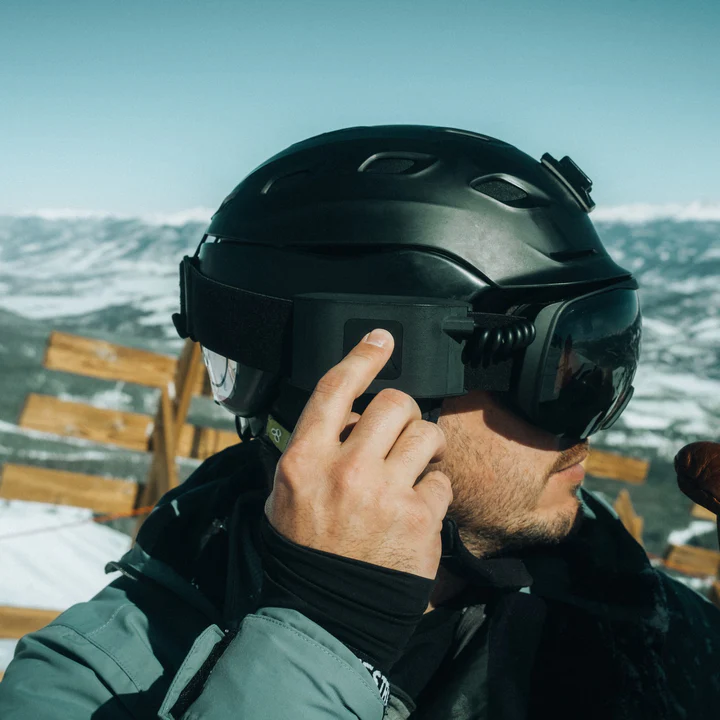
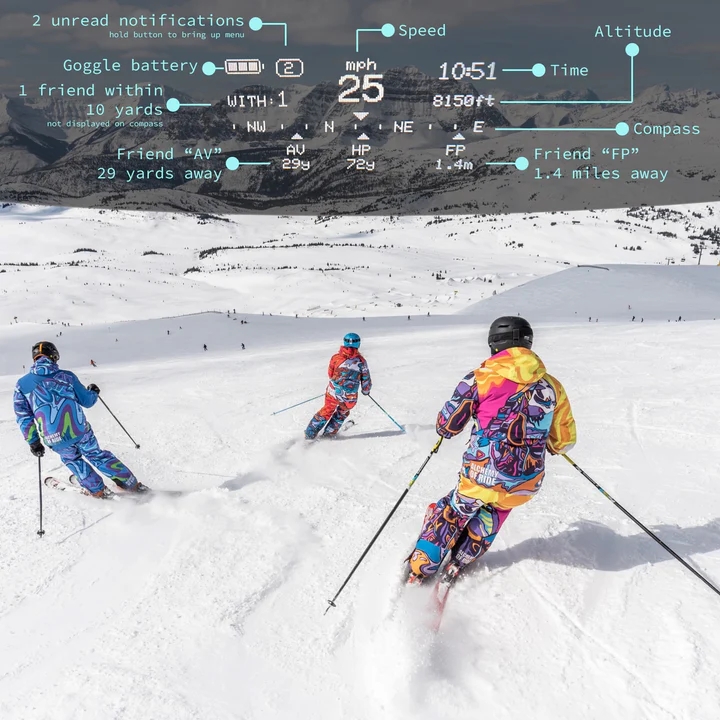
The 2025/26 season tells a different story. Modern HUD goggles, particularly models from innovative brands like Rekkie, are purpose-built for alpine conditions. Micro-displays embedded within the lens project key metrics — speed, altitude, slope angle, directional cues, and even partner positions — directly into the skier or climber’s peripheral view. The information is designed to be glanceable, intuitive, and minimally intrusive, leaving the athlete’s central vision unobstructed. Battery life now reliably supports full-day tours, even in extreme cold, while low-power displays and adaptive refresh rates keep the visual overlay crisp without overwhelming attention. Connectivity with GPS watches or smartphones ensures that data remains up-to-date, while the interface prioritizes simplicity over flashy graphics.
On the lighter end of the spectrum, mainstream augmented reality glasses like the Meta Ray-Ban 2025 model provide hands-free documentation and basic navigation support. These frames are ideal for recording conditions, capturing photos or voice notes, and logging routes without reaching for a phone or camera. New features such as improved low-light sensors, glove-friendly controls, and long-lasting charging cases have addressed historical limitations, allowing the devices to complement, rather than complicate, a backcountry kit.
Practical use demonstrates the subtle power of these devices. A climber skinning up a predawn slope can monitor vertical gain while keeping eyes on the terrain. A ski guide in a couloir can track partners’ positions through peripheral HUD cues, while a snowboarder can log snowpack tests hands-free. Importantly, the technology augments judgment without replacing it — the athlete still reads the slope, notes changing conditions, and evaluates risk using experience first, with digital tools providing quiet, reliable support in the background.
The trajectory for smart eyewear is toward interoperable, modular systems. Future iterations promise integration with real-time snowpack data, AI hazard alerts, and advanced slope analytics, all designed to remain discreet and low-weight. What was once a gadget for early adopters is fast becoming an essential, practical tool for navigating, documenting, and staying aware in complex alpine terrain.
Rekkie HUD Goggles — real-time speed, maps, and partner tracking in your field of view.
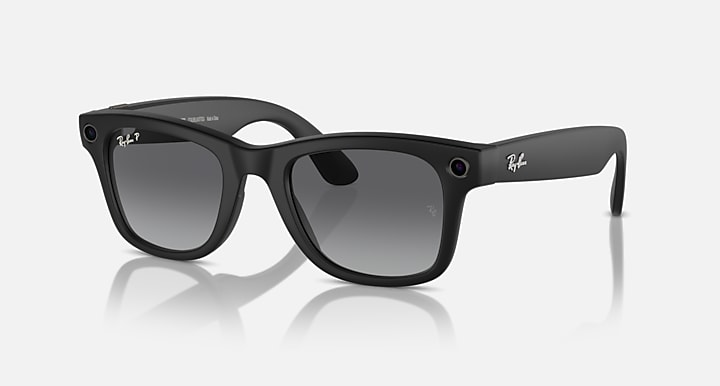
Meta Ray-Ban AR Glasses — hands-free voice commands, media capture, and subtle notifications for alpine and urban crossover use.
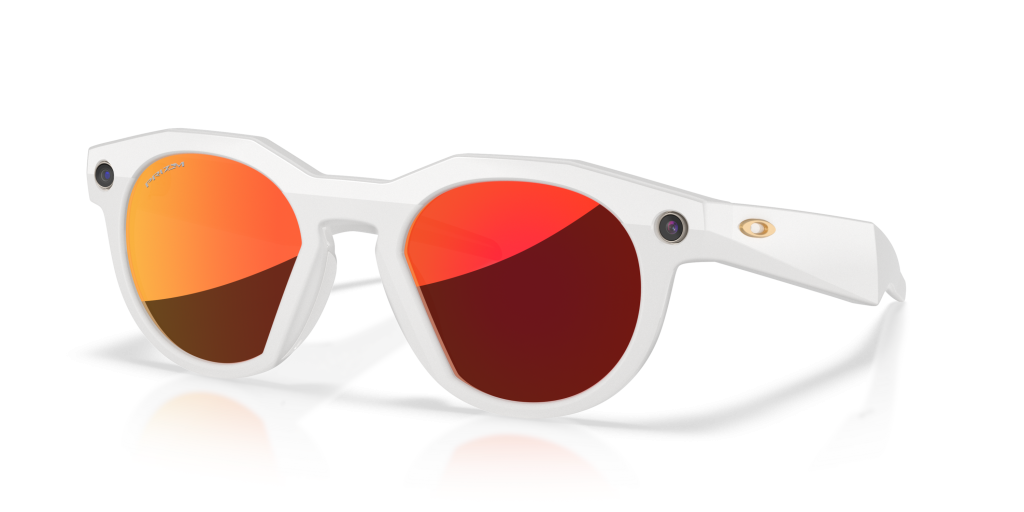
Meta Oakley Glasses — hands-free voice commands, media capture, and subtle notifications for sport and urban crossover use.
The Wrist as the Hub: Smartwatches and Alpine Ecosystems
If the goggles and smart glasses provide the eyes, then the wrist has become the brain of modern alpine technology. Once confined to counting steps or measuring heart rate, today’s GPS smartwatches serve as the central nervous system of the backcountry kit, orchestrating navigation, performance monitoring, communication, and safety alerts with a glance or a subtle vibration. In 2025/26, the wristwatch is no longer an accessory; it is an operational hub, capable of connecting every layer of the modern alpine ecosystem.
The Garmin fēnix 8 series exemplifies this evolution. Rugged, weather-resistant, and built for endurance, it combines multi-band GNSS satellite reception with offline topo maps, allowing precise navigation in remote valleys, steep couloirs, and forested alpine terrain where smartphones often fail. Glove-friendly controls, high-contrast displays readable in whiteout conditions, and programmable alerts allow users to monitor vertical gain, slope angles, and partner positions without breaking stride. Battery life extends through multi-day excursions, particularly in power-saving modes, giving athletes confidence on hut-to-hut tours or extended ski traverses. Integrated avalanche bulletins, weather alerts, and breadcrumb trails provide decision-making support in conditions where situational awareness is paramount.
Endurance-focused watches such as the Suunto 9 Peak Pro and COROS VERTIX 2S push these capabilities further. With continuous GPS logging measured in dozens of hours and offline map storage, they are tailored for weeklong expeditions. GPX and FIT file support ensures cross-platform compatibility, allowing teams to synchronize routes and share critical data even when using different brands of devices. When paired with satellite messengers like the Garmin inReach Mini 2, these watches become an essential link in a redundant communication network, capable of SOS messaging, real-time partner tracking, and location reporting independent of cellular coverage.
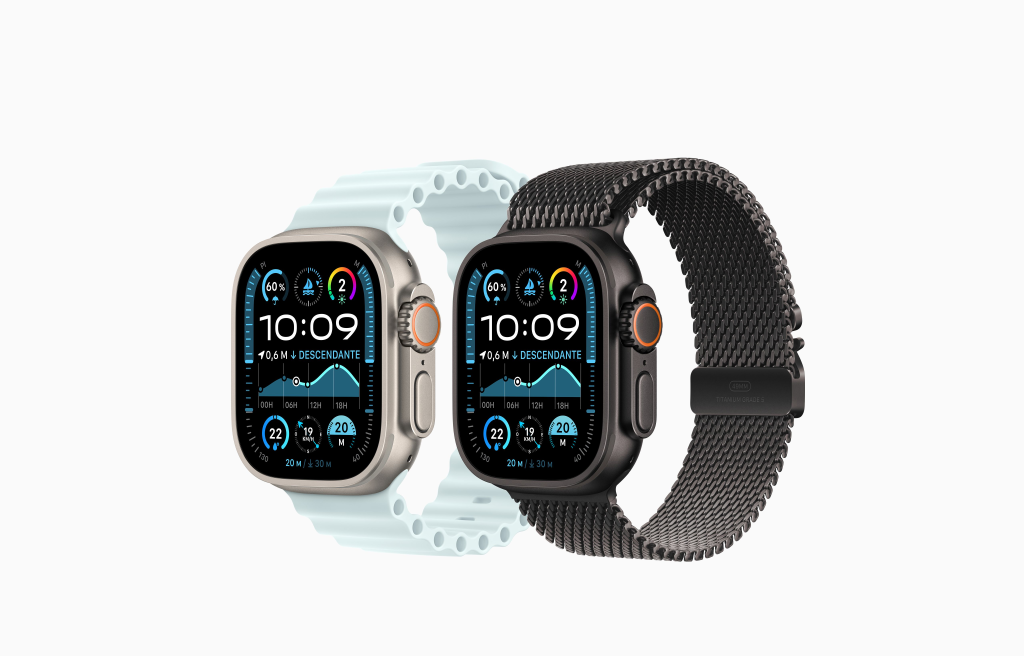
Even devices like the Apple Watch Ultra 3, historically designed for urban or trail use, have earned a place in the backcountry. Dual-frequency GPS, Backtrack functionality for retracing steps, and the Action Button for gloved operation make it a credible navigation partner for short tours or approach routes. Third-party apps extend capabilities to offline topography, route logging, and avalanche-aware alerts, while integration with satellite tethering ensures the watch remains connected even in areas without reception.
The true innovation lies not just in what the watches measure, but in how they coordinate the larger ecosystem. A waypoint entered on a fēnix 8 can instantly appear on paired goggles, alerting a skier to a critical turn or slope hazard. Avalanche warnings, partner locations, and route progress propagate through connected devices, reducing the cognitive load on the athlete while preserving full situational awareness. Glanceable displays and haptic cues allow split-second decisions without distraction, letting the athlete focus on terrain, speed, and flow.
The modern alpine wristwatch exemplifies the quiet integration of technology: it does not dominate attention but continuously supports judgment. In combination with HUD goggles, satellite messengers, and mapping software, it ensures that navigation, communication, and safety work seamlessly as a single, resilient system. As 2025/26 unfolds, this layered approach allows skiers, climbers, and mountaineers to move faster, lighter, and with confidence, proving that the wrist has become the indispensable control center of the connected backcountry.
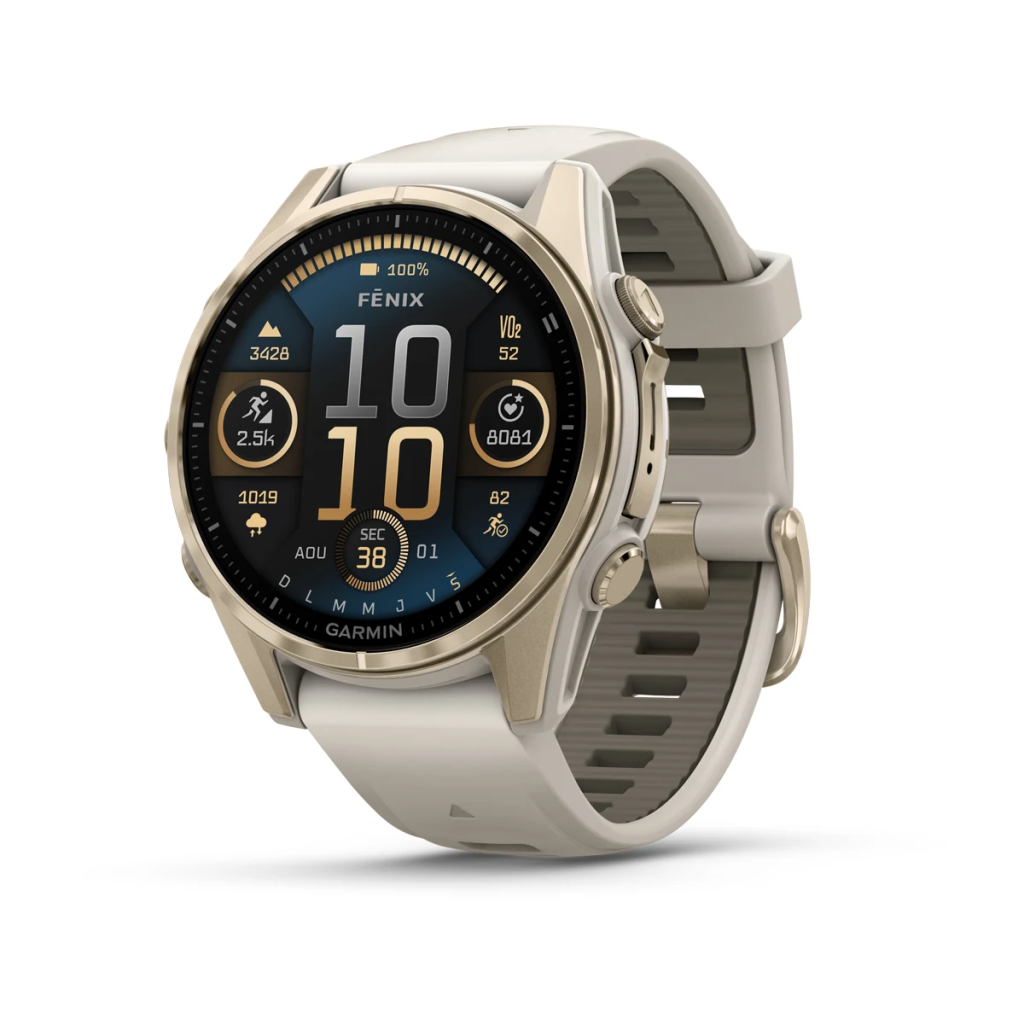
Garmin fēnix 8 — a multi-day GPS powerhouse, integrating hazard alerts, tracking, and satellite connectivity into a wrist-sized hub.
Apple Watch Ultra 2 — pairing urban usability with alpine resilience, dual-frequency GPS, and glove-friendly controls.
Mapping the Invisible: Digital Maps and Planning Tools
Planning alpine routes has evolved far beyond paper maps and hand-sketched notes. By 2025/26, digital mapping platforms have matured into fully integrated, three-dimensional tools that are as much about foresight as navigation. Modern applications translate complex terrain, gradient, exposure, and avalanche risk into intuitive visual overlays, allowing athletes and guides to anticipate hazards before they even leave the hut. The map has become an active partner in decision-making, rather than a static reference.
A major turning point came with Strava’s acquisition of FATMAP in 2024. FATMAP’s industry-leading 3D terrain engine now powers Strava’s Alpine module, giving users immersive, interactive visualizations. Routes can be planned on desktop or tablet, annotated with waypoints, skin tracks, and descent lines, then exported directly to watches or HUD-enabled goggles. The system makes it possible to identify convexities, choke points, or avalanche-prone slopes at a glance, providing real-time spatial awareness even in remote backcountry environments. Offline downloads ensure functionality when cellular coverage vanishes, preserving the reliability that critical alpine navigation demands.
Gaia GPS and CalTopo continue to serve as indispensable tools for meticulous planning. Gaia’s avalanche-aware layers, slope-angle shading, and terrain filters survive offline, offering uninterrupted decision support in signal-free valleys. CalTopo excels in pre-trip analysis: plotting lines with precision, evaluating sun exposure, wind direction, and generating PDF backups as analog fail-safes. Together with Strava Alpine, these platforms allow frictionless synchronization: a route drawn at the desk can appear within minutes on a partner’s watch or HUD goggles. Edits in the field propagate through shared folders, keeping the entire team aligned.
Integration with wearable devices transforms static maps into dynamic tools. Breadcrumb trails, waypoints, and vertical gain metrics are visible on the wrist or projected into peripheral vision via goggles. Real-time partner tracking ensures each skier or climber is aware of the group’s position, while hazard overlays, slope analytics, and snowpack data provide context for split-second decisions. By unifying planning, navigation, and situational awareness, these systems reduce cognitive load and enable faster, safer movement across complex alpine terrain.
The visual clarity of modern mapping has also changed risk assessment. Color-coded slope gradients, aspect indicators, and avalanche likelihood overlays communicate danger without mental translation from contour lines. Subtle cues allow athletes to focus on terrain and flow rather than data interpretation. Preloading routes, hazard layers, and offline maps is now standard practice, ensuring redundancy without friction and leaving the athlete free to respond instinctively to the mountain rather than relying solely on the device.
By 2025/26, digital maps are more than a navigational aid; they are a connective tissue linking watches, goggles, and satellite messengers into a cohesive ecosystem. Each device plays a distinct role, yet the maps act as the common reference point, coordinating data streams and giving the user a single, coherent picture of the environment. In doing so, they elevate planning from preparation to an active, continuous process, allowing athletes to navigate uncertainty with precision, confidence, and situational awareness.
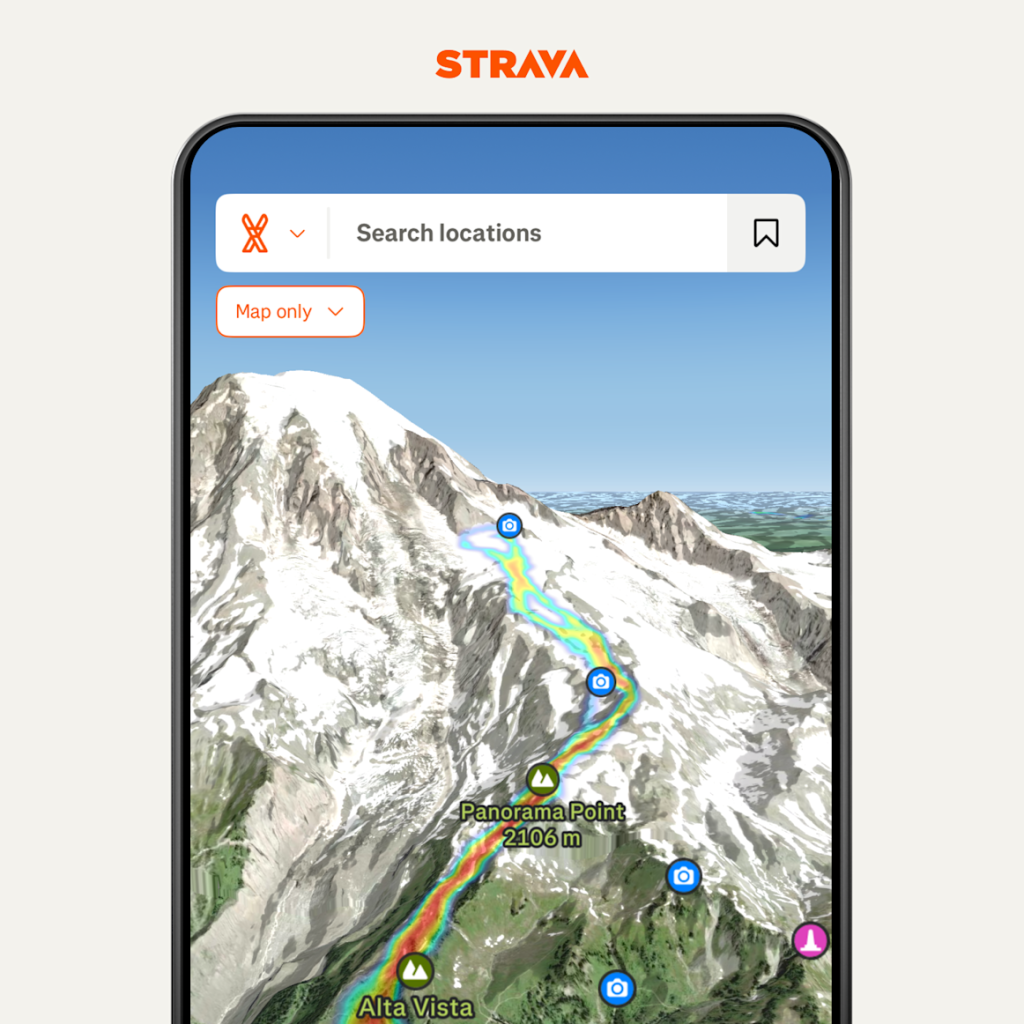
Figure 8: Strava Alpine module — 3D terrain overlays, hazard visualization, and waypoint export to watches and AR goggles.
With lifelike 3D terrain, detailed satellite imagery, and new maps layers for planning winter and trail activities, Strava’s maps deliver additional value for users looking to stay active outdoors year round.
Powered by the company’s proprietary Map Rendering Engine (MRE), Strava’s maps now utilize technology from FATMAP.
- Avalanche Gradient – Shows only the slope gradients where an avalanche is likely to release, from 25° to 45°+.
- Gradient – Shows slope angle from 0° to 90° to help users understand the steepness of their terrain.
- Aspect – Shows the direction a slope faces to help users find the best snow and understand how much sun a particular face of the mountain might receive.
- Winter Map Style – Winter-focused map for better planning and reliving of snow activities.
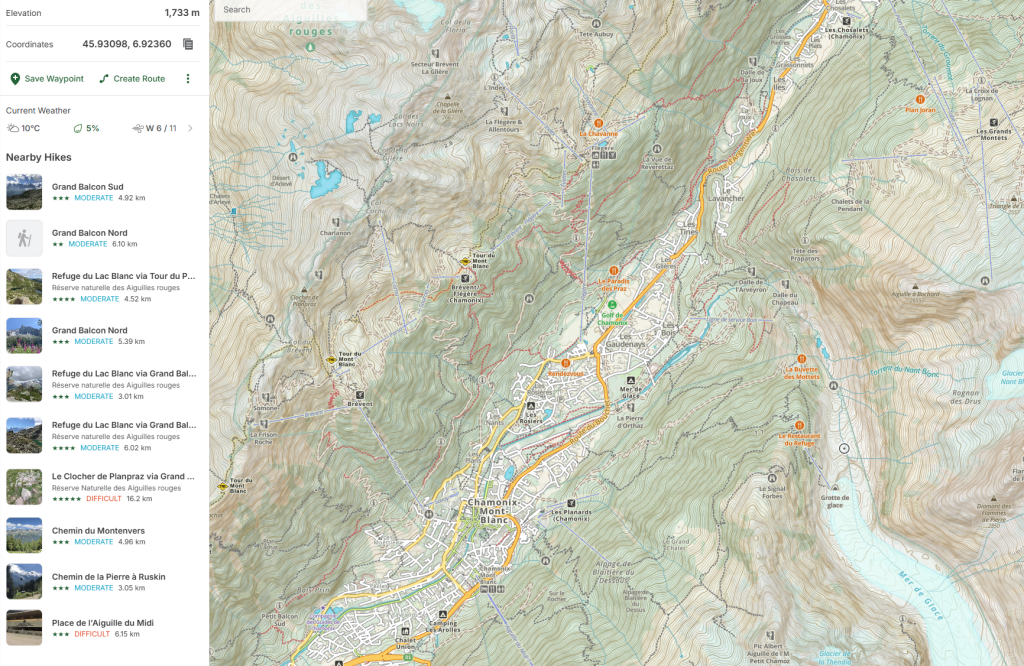
Figure 9: Gaia GPS — offline topography, slope-angle shading, and dynamic avalanche-aware layers for remote alpine navigation.
Signal and Silence: Satellite Communication and Avalanche Safety
Connectivity has long been the Achilles’ heel of backcountry travel. Mountains inherently block cellular networks, leaving skiers, climbers, and mountaineers reliant on ingenuity, analog navigation, and careful planning. By 2025/26, satellite messengers, “smart” avalanche transceivers, and integrated communication devices have transformed this landscape, creating a quiet but vital safety net without intruding on the flow of movement.
At the forefront of this evolution is the Garmin inReach Mini 2. Small, glove-friendly, and rugged, it provides two-way messaging, GPS location tracking, and SOS capabilities across the Iridium satellite network — literally anywhere the mountains reach. Pre-programmed check-ins allow partners and family to stay informed, while full keyboard access via the companion app allows for nuanced messaging when necessary. The SOS function connects directly to professional rescue coordination centers, cutting response times and ensuring clarity even when traditional communication fails. Smart configuration of tracking intervals allows precise monitoring in exposed terrain while conserving battery during longer, safer traverses.
Avalanche transceivers have also evolved beyond simple beeping devices. Ortovox’s DIRACT VOICE, for example, provides clear spoken prompts during multi-burial scenarios, reducing cognitive load when stress and adrenaline are high. Users no longer rely solely on visual icons with trembling hands; the device guides search and rescue actions audibly and instantly. Other Bluetooth-enabled transceivers now support firmware updates, practice logs, and companion apps, though field functionality remains independent of connectivity to preserve reliability. These devices exemplify the balance between digital enhancement and analog necessity.
Modern backcountry safety relies on layered, redundant systems. A GPS watch monitors navigation and hazard alerts, a satellite device manages SOS communication, goggles provide glanceable route and partner overlays, and the smartphone is reserved for media capture, full-map review, or emergency backup. This modular approach ensures that failure of any single device does not compromise overall safety, and distributes power and attention across the ecosystem efficiently.
Integration continues to advance. Mesh networking and cross-platform data sharing allow watches to relay a partner’s SOS status, goggles to display hazard markers logged from another device, and satellite messengers to sync automatically with companion apps. Information flows unobtrusively, reducing the cognitive burden on the athlete while preserving situational awareness. Placement of devices — on hip belts, chest straps, or harnesses — is a matter of both accessibility and signal optimization, and routine drills for SOS activation, probe deployment, and shovel use remain critical for readiness.
The focus for 2025/26 is miniaturization, endurance, and seamless connectivity. Satellite messengers are lighter, longer-lasting, and capable of intermittent weeks-long operation. Avalanche transceivers provide instant, intelligible feedback, while companion apps allow continuous refinement without hardware replacement. The best systems are invisible until needed, quietly maintaining a lifeline while athletes focus on movement, terrain, and conditions.
Safety tech has become widely adopted, no longer reserved for elite guides or professionals. Weekend skiers, splitboarders, and mountaineers now expect reliable, intuitive, and interoperable devices that work under stress, in extreme cold, and across a mixed ecosystem. In this environment, signal and silence coexist: technology communicates critical information only when necessary, preserving the tranquility and focus required for alpine decision-making while ensuring rescue and coordination are always within reach.

Garmin inReach Mini 2 — satellite messaging, SOS, and live tracking keep you connected when phones fail, forming a critical safety backbone.
Integration & Future: The Connected Alpine Ecosystem and Looking Ahead
The 2025/26 backcountry kit is no longer a loose collection of gadgets; it has matured into a connected ecosystem where each device plays a defined role. Smart eyewear provides glanceable overlays of speed, slope, partner positions, and alerts. GPS watches orchestrate navigation, logging, and hazard notifications. Satellite messengers extend communication and SOS capability beyond cellular reach. Mapping platforms act as a shared reference, feeding data to goggles, watches, and phones alike. Together, these components form a resilient network, reducing cognitive load and allowing the athlete to focus on movement, decision-making, and the mountain itself.
Integration is the defining trend. Waypoints entered on a smartwatch automatically appear on paired HUD goggles. Live partner tracking propagates through watches, goggles, and satellite devices, while hazard alerts, avalanche bulletins, and environmental data update in real time. The ecosystem functions quietly, without forcing attention to flickering screens or intrusive notifications. Each device handles the tasks for which it is best suited: the wrist computes, logs, and alerts; the eyewear displays; the satellite device communicates; and the smartphone archives, reviews, and synchronizes.
This layered architecture enhances both performance and safety. Athletes move faster, lighter, and more confidently, knowing that navigation, hazard awareness, and communication operate in the background. Redundancy ensures that if one device fails, others maintain critical functionality. The technology is designed to fade into the background, empowering the athlete rather than dominating attention. Even in extreme cold, whiteouts, or complex terrain, the integrated system allows decisions to remain grounded in experience, intuition, and observation.
Looking forward, the trajectory is toward deeper interoperability, smarter AI features, and predictive analytics. Future watches may provide context-aware alerts for wind slabs or slope angles. HUD overlays could dynamically adjust to upcoming terrain, projecting snowpack data or hazard indicators in real time. Satellite communicators may integrate impact sensors or movement tracking, while mapping platforms evolve to layer environmental and micro-weather data seamlessly across devices. The ultimate goal is an ecosystem that feels invisible yet continuously extends situational awareness and safety, letting athletes focus on flow, efficiency, and enjoyment.
Culturally, this connected approach is transforming alpine practice. Professional guides, educators, and experienced backcountry enthusiasts now expect the ecosystem to be reliable, intuitive, and interoperable. Weekend adventurers increasingly adopt similar setups, creating a baseline of safety and awareness that extends across all levels of participation. Technology is no longer a novelty; it is a companion, silently enabling confident decision-making, documentation, and communication.
In the end, the modern alpine ecosystem is defined by quiet intelligence. Each device performs a precise role, redundancy and preparation reinforce reliability, and human judgment remains the ultimate authority. When watches, goggles, satellite communicators, and maps operate in concert, they create an environment where the mountain can be navigated with both efficiency and respect. For the 2025/26 season, backcountry travel is no longer constrained by isolation or uncertainty; the connected alpine kit allows athletes to move faster, safer, and more assuredly than ever before, blending technology and skill into a seamless, empowering experience.