
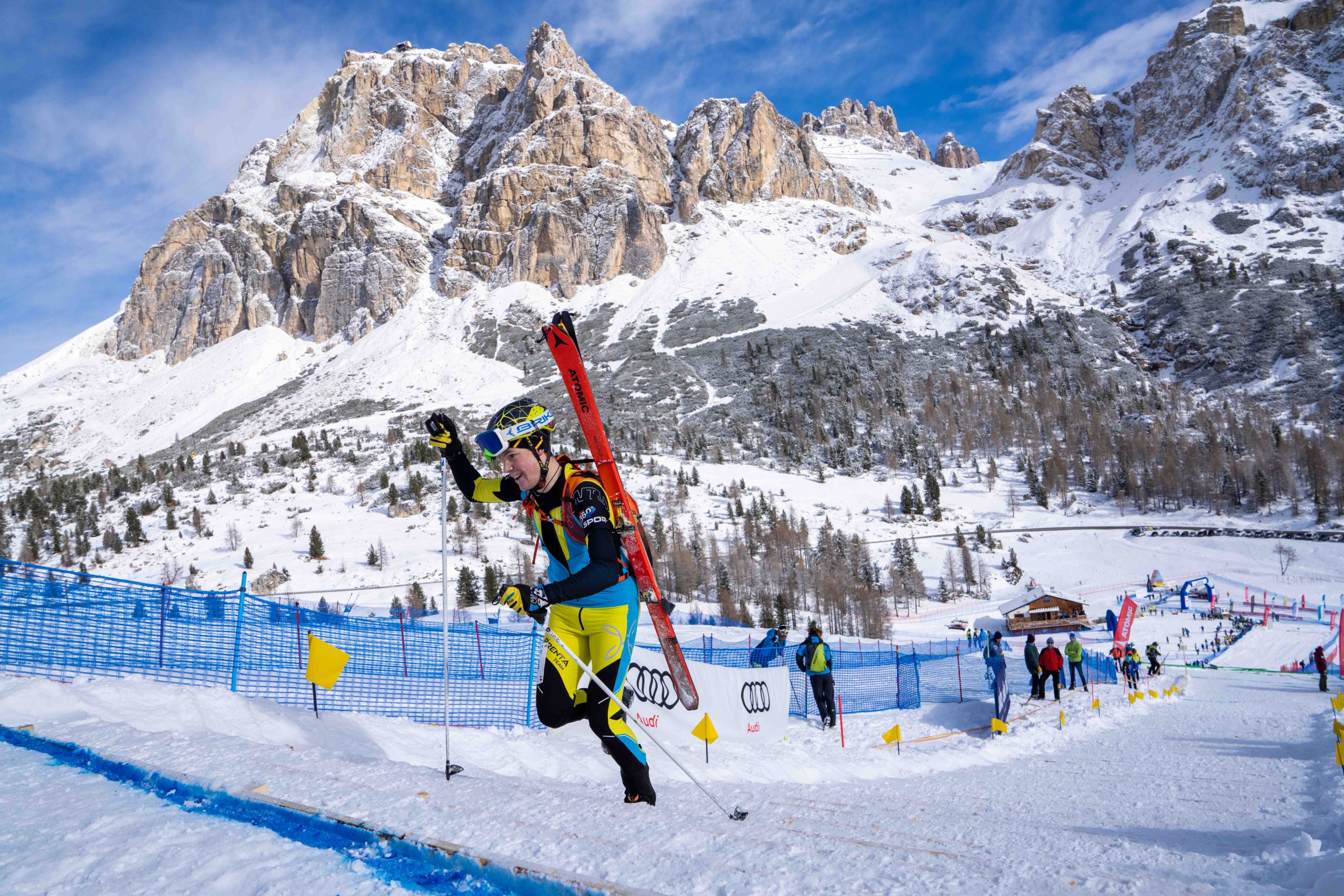
At dawn above Cortina d’Ampezzo, the only sounds are the scrape of skins and the steady breath of athletes climbing into the thin air of the Dolomites. The sport looks simple from afar—ski uphill, ski down—but the pace, precision, and purity of ski mountaineering racing, or skimo, tell a more intricate story.
This winter discipline, born from the pragmatic movements of Alpine farmers and soldiers, has become one of the most dynamic, aerobic, and technically demanding sports in the mountains. As it prepares for its Olympic debut at Milan–Cortina 2026, it carries both the heart of mountain travel and the polish of modern elite competition.
From Survival Skill to Global Sport
Ski mountaineering’s origins go back centuries. Long before chairlifts and freeride films, crossing snowbound mountain passes was a matter of survival. Hunters, shepherds, and guides perfected the art of moving efficiently over snow, learning how to glide, edge, and climb with the minimum of effort.
The transition from necessity to sport began in the early 20th century. The first recorded races took place in the Alps and Scandinavia, as locals began testing their efficiency against one another over long, grueling routes. Military patrol races in the 1920s—precursors to modern biathlon—cemented the concept of competitive ski travel.
Through the 1980s and 1990s, the sport evolved rapidly. French, Swiss, and Italian mountain clubs began to codify rules. The Pierra Menta in France and the Trofeo Mezzalama in Italy drew endurance athletes, alpinists, and backcountry purists alike. In 2008, the International Ski Mountaineering Federation (ISMF) was founded, standardizing formats and safety regulations. Skimo was no longer an offbeat niche; it had become a world tour.
Cortina 2024: The Modern Face of Skimo
The 2024 ISMF World Cup Finals in Cortina d’Ampezzo (April) offered an ideal lens into elite competition. In the Vertical race, Rémi Bonnet claimed first place with a time of 24:05.9. skimostats.com Meanwhile, press reports noted that the athlete “once again proved his mastery of the vertical discipline.” planetmountain.com
In the Individual race, Bonnet and Axelle Gachet-Mollaret shone. Fondazione Cortina’s press materials refer to them as shining “in ISMF Cortina World Cup Finals Individual Race.” Fondazione Cortina+1 Their performances underscored how skimo now combines raw physicality with refined technique under pressure.
Cortina’s press releases emphasize that the accompanying photo galleries are “free for journalistic use with citation of the photo credit.” Cortina Skimo Cup That means you can legally obtain vivid action shots from that event for your article, with proper attribution.
The Art of Efficiency
To outsiders, skimo can look like an uphill slog. To competitors, it’s a choreography of efficiency—each motion weighed, paced, and refined.
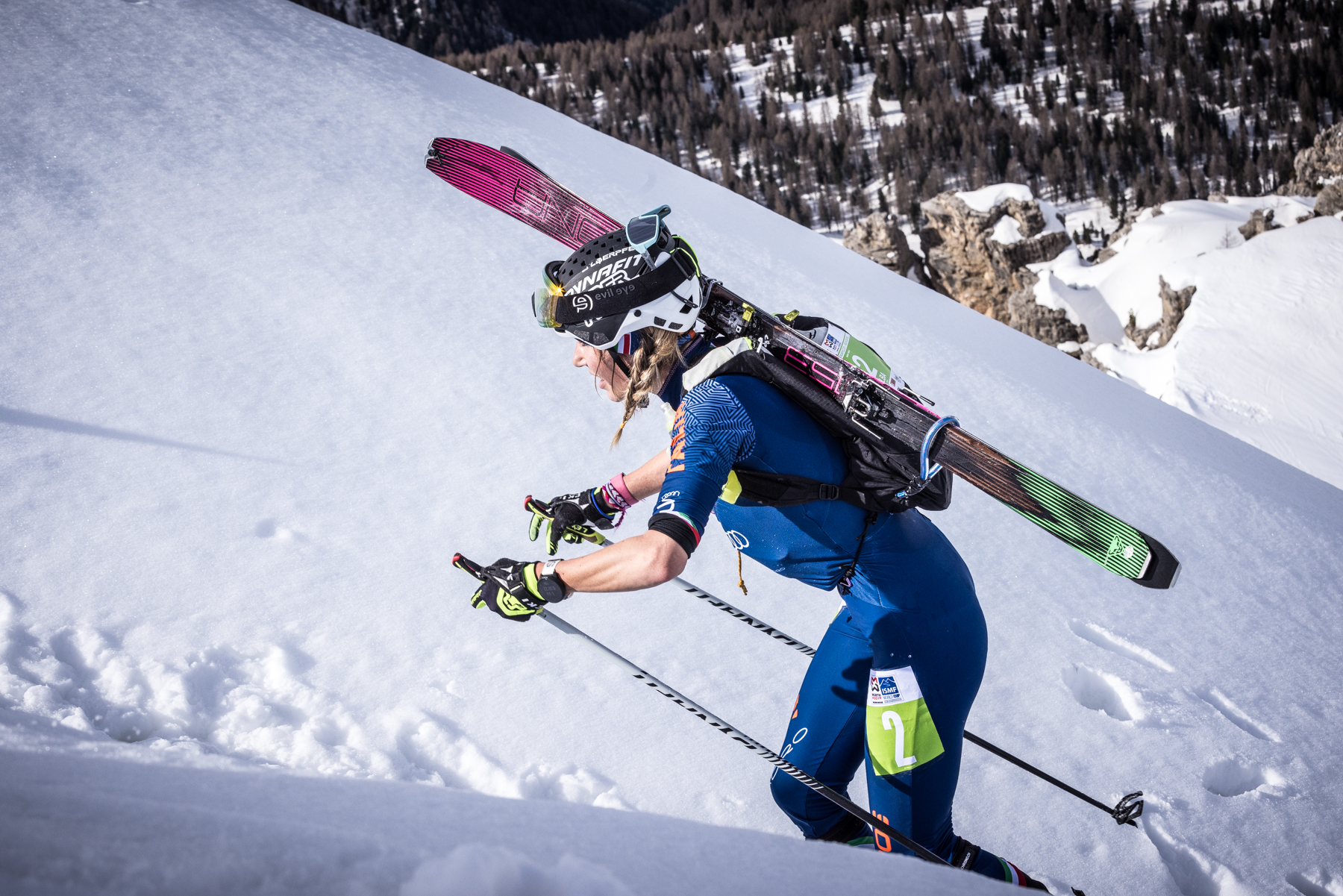
Top athletes ascend 1,000 vertical meters in under forty minutes, change from uphill to downhill mode in seconds, then descend at high speed over challenging terrain. Yet every meter up is earned—not a downhill intimate moment, but a battle of systems: muscular, metabolic, mechanical.
Gear Evolution: The Weight of Speed
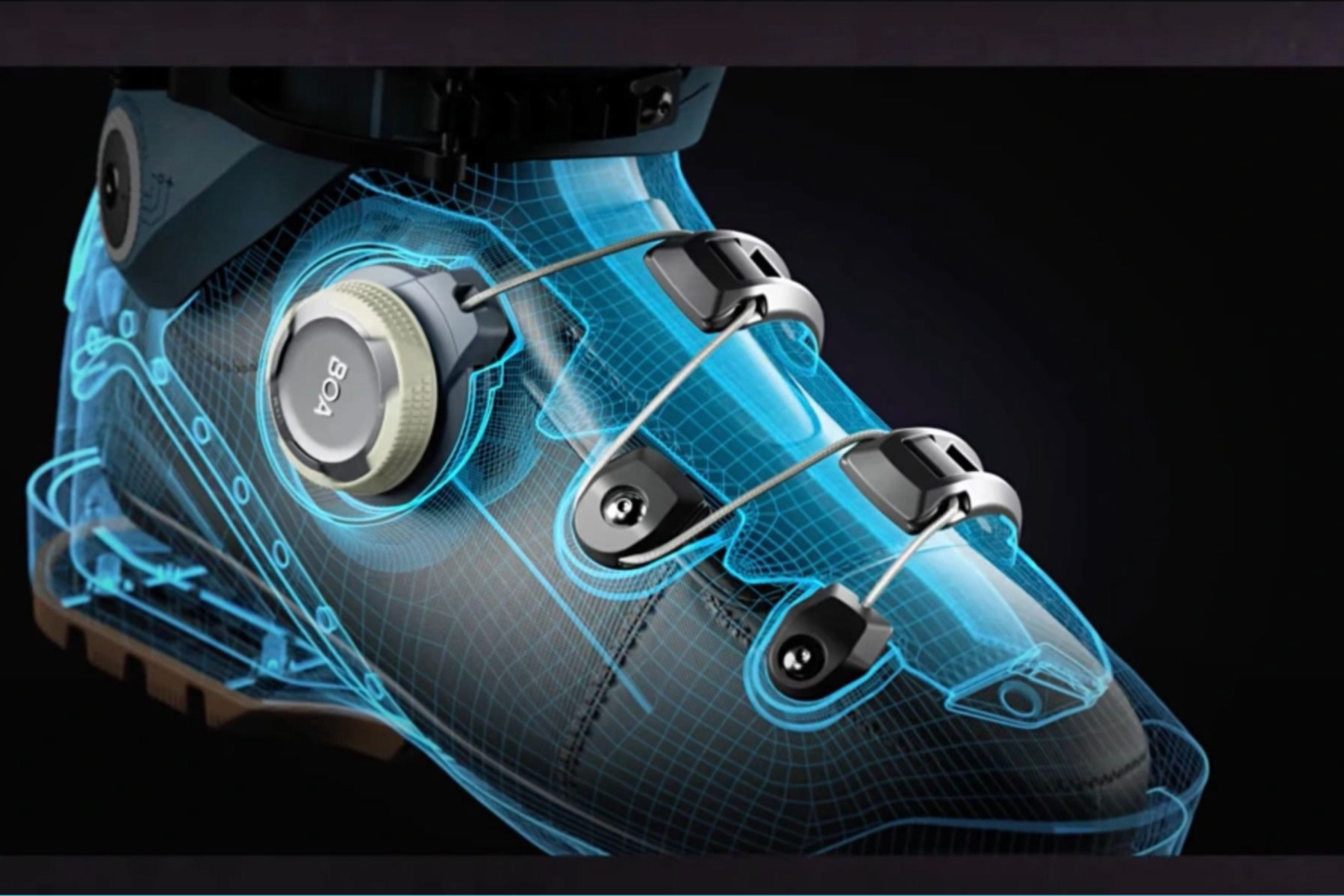
Equipment has undergone a revolution. Where once ski-mountaineers lugged heavy gear built for safety over speed, race kits now aim for sub-5 kg totals. Skis, bindings, boots, skins, poles, pack—all slimmed to the limits.
“Every gram you leave behind makes you faster on the climb.” — paraphrased from Dynafit Speed Up philosophy
Dynafit’s Speed Up concept offers a blueprint: lean yet reliable, designed around performance constraints. The brand frames it as “less mass, more motion”. Fondazione Cortina Their design philosophy aligns with what elite athletes now expect.
Skins: hybrid glues, minimal widths, optimized weight for grip.
Boots: dual-zone flex, reinforced shells—functional uphill, stable downhill.
Bindings: pared-down, precise, no redundant parts.
Race suits and packs: integrated features, seamless transitions, hydration access without fumbling.
Mandatory safety gear: transceiver, shovel, probe—always in the mix, never optional.
At Cortina, racers carried race packs of 5–6 kg loaded. Every gram mattered. This balance between extreme lightness and mountain safety defines modern skimo.
Equipment & Mandatory Gear (Concise View)
We can summarize what’s required without drifting into list style:
Racers must carry gear that combines functionality with weight discipline—boots and bindings that meet ISMF rules, a helmet that passes both skiing and mountaineering safety standards, a race pack that carries the mandatory avalanche kit (beacon, shovel, probe), plus a lightweight outer layer. Race suits now integrate skin stowage and hydration access to shave transition time. All of that must ride high on performance, because the gear not only supports but defines who competes well.
Race Formats and Mind Games
Skimo is a fusion of speed, endurance, and decision-making. The Vertical is raw ascent—simple, punishing. The Individual weaves descent, transitions, and route choice. Sprint and Mixed Relay, the Olympic formats, compact that blend into short bursts of maximal intensity.
Transitions—skin off, boot lock, pole redeploy—are micro-battles. Athletes often say they “train transitions 10,000 times” because a sloppy change can cost medals. The mental zone where breathing, pacing, and movement align is sometimes called flow, and in skimo, it’s a necessary survival.
Mountains, Machines, and Minds
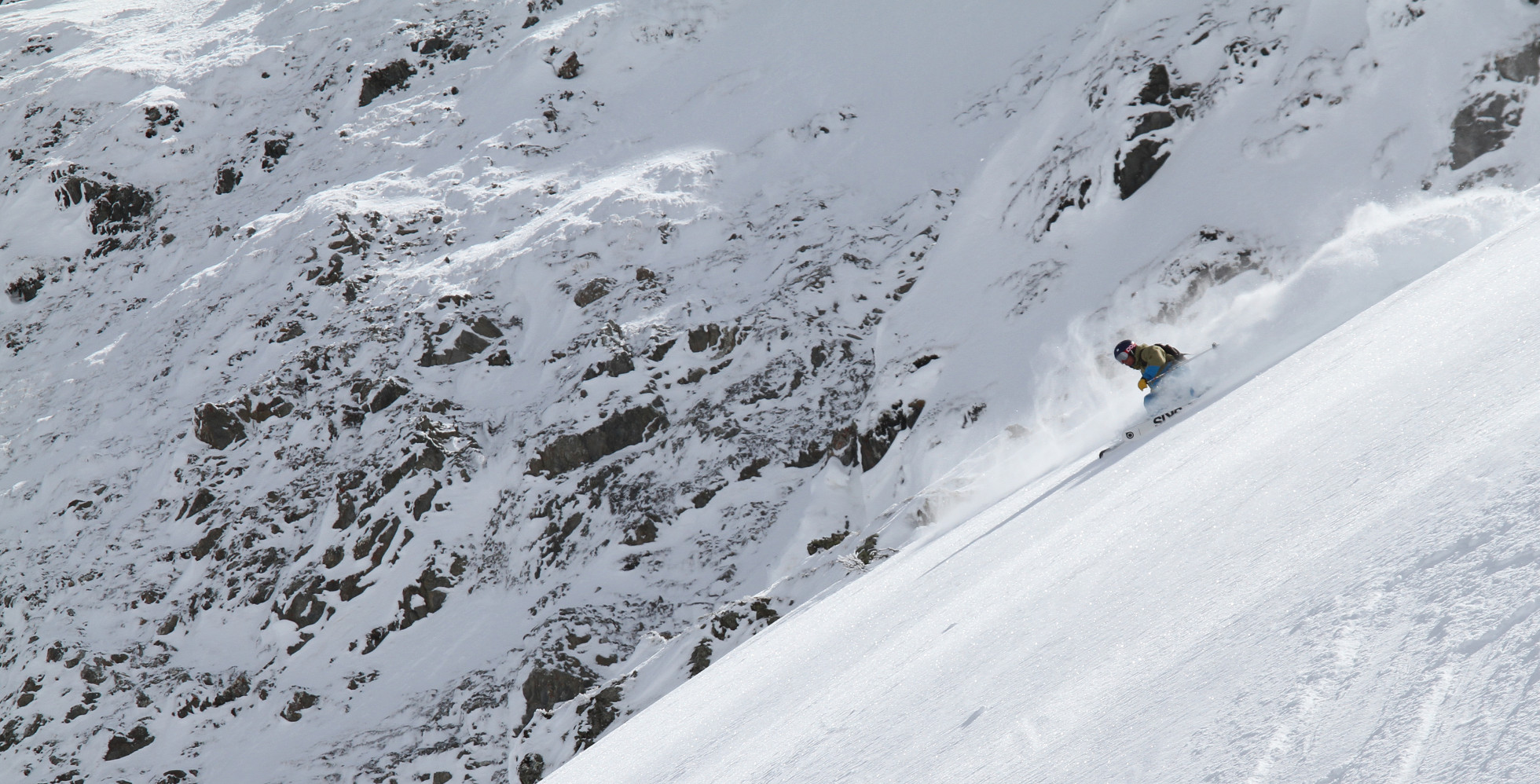
Beyond speed and spectacle, skimo remains a dialogue with the mountains. It demands humility. Conditions shift. A safe line uphill may become treacherous on the way down. Racers must assess snow, wind, exposure—not just pace.
Skimo is still about skilled movement through snow, economy of motion, and respect for the mountain’s complexity. The Olympic spotlight may add glamor, but the essence stays: human power over gravity, measured in vertical meters and heartbeats.
Looking Forward to Milan–Cortina 2026
Now elevated to Olympic status, skimo is moving faster than ever. National federations are refining rules, talent pipelines are forming, and manufacturers are racing to advance the next generation of gear.
When the torch lights, skimo’s audience will widen. But for those in the sport, the essential narrative remains: how fast can you move through snow, on your own power, under mountain pressure? The terrain hasn’t changed—the stakes have.
Image Credits
Fondazione Cortina / ISMF Press Office / Dynafit Media
(Cortina 2024 World Cup Finals – Vertical & Individual Races)
Skimo Makes Olympic Debut at Milano Cortina 2026
After decades on the fringes of competitive winter sport, ski mountaineering will make its official Olympic debut at the Milano Cortina 2026 Winter Games. The International Olympic Committee unanimously approved the addition of skimo to the program in July 2021, bringing a discipline that’s been racing in the mountains since the 1930s into the world’s biggest sporting arena.
The Events
The Olympic program features three medal events: men’s and women’s sprint races, and a mixed relay. A total of 48 athletes—24 men and 24 women—will compete, making this one of the most compact additions to the Winter Games in recent years.
The sprint format consists of one uphill section, one on-foot section, and one downhill section, featuring an elevation change of up to 70 meters. Each sprint race lasts approximately 3.5 minutes. Most events consist of heats, semifinals, and a final, with the fastest athlete in the final declared the winner.
The mixed relay pairs one man and one woman who alternate legs, with two ascents (one including an on-foot section) and two descents. Each athlete completes the course twice, with the woman starting and the man finishing. Teams tag on course to swap, with the fastest overall time taking the medal.
The Venue
Competition will take place at the Stelvio Ski Centre in Bormio, in the Valtellina—the same venue hosting all men’s Alpine skiing events at the 2026 Games. The sprint events are scheduled for Thursday, 19 February, with the mixed relay following on Saturday, 21 February.
Bormio hosted the Olympic test event in February 2025, giving athletes a chance to recce the course under competition conditions. The Stelvio has history—its Alpine pedigree runs deep, with World Cup downhills testing the best skiers for decades. Now it’ll host a discipline that shares DNA with both Alpine and cross-country, but remains its own beast entirely.
Qualification
Athletes can earn quotas through the 2025 ISMF World Championships and via the Olympic Mixed Relay Ranking List and Olympic Sprint Ranking List during the qualification period running from 1 November 2024 to 21 December 2025. At the World Championships, quotas are available in both the mixed relay (four athletes—two men and two women) and the sprint events (two in each of the women’s and men’s competitions).
The Contenders
The Alpine nations—France, Italy, and Switzerland—have historically dominated ski mountaineering. At the 2025 World Championships, France collected 10 medals including four golds, with Switzerland taking seven medals and three golds.
Spain’s Oriol Cardona Coll won gold in the men’s sprint at the 2025 World Championships and claimed the ISMF World Cup title, including victory at the Bormio test event. France’s Emily Harrop swept every World Cup women’s sprint during the 2024-25 season and took home her fourth consecutive overall World Cup title. Her relay partner, Thibault Anselmet, claimed his third straight men’s overall title, and the pair won the mixed relay at the 2025 World Championships.
Their main competition in the mixed relay comes from Cardona Coll and Ana Alonso Rodriguez, Spain’s top duo who won both the mixed relay World Cup title and the Olympic test event.
What It Means
Skimo was first introduced at the Youth Olympic Winter Games Lausanne 2020, giving younger athletes a taste before the full Olympic integration. The move to include it at Milano Cortina reflects the IOC’s push to add sports with youth appeal and environmental relevance—skimo’s backcountry roots and minimal infrastructure requirements fit that brief.
For the athletes who’ve been grinding World Cup circuits and obscure mountain races for years, February 2026 represents validation. The sport’s technical demands—skinning efficiency, transition speed, descent control—will be on full display. Whether the Olympic spotlight changes skimo’s character remains to be seen, but for two days in Bormio, the world will be watching athletes do what they’ve always done: go up and down mountains as fast as humanly possible.