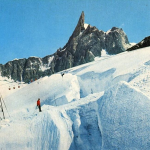

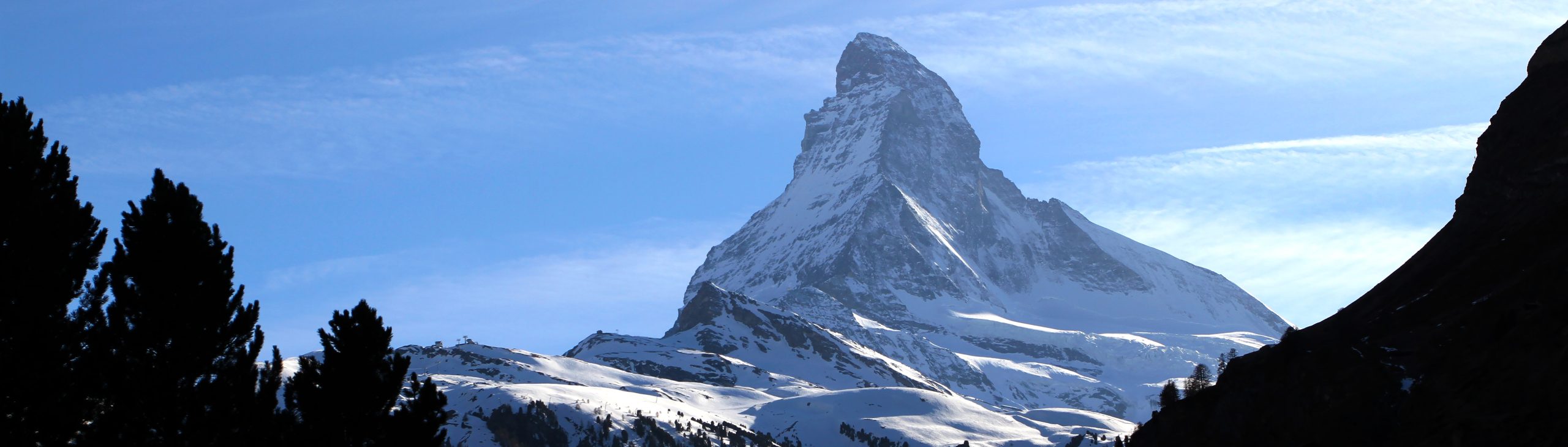
On the Matterhorn’s iconic summit ridge, climbers clip into fixed ropes that have hung there for seasons. The nylon fibers, exposed to relentless UV radiation and wind, slowly shed microscopic fragments. Far below in New York’s Adirondack Mountains, hikers ascend Lake Tear of the Clouds, leaving an invisible trail of rubber particles from their soft-soled shoes. In Switzerland’s Lake Sassolo—a remote alpine tarn at 2,074 meters with no human habitation—researchers found 2.6 microplastic particles per liter of water.
These scenes, separated by an ocean, tell the same story: even our most pristine wilderness is contaminated by microplastics. And increasingly, the source isn’t atmospheric fallout from distant cities—it’s us, carrying pollution in with every step, every climb, every ski tour.
The Swiss Alps: A Microplastics Laboratory
Switzerland should be a best-case scenario. It’s the best-performing European country for plastic waste collection, with comprehensive recycling and incineration programs. Yet microplastics pervade even its most remote landscapes.
A 2019 study by Swiss, Austrian, and Dutch researchers estimated that 43 trillion tiny plastic particles land in Switzerland every year, from the Alps to the lowlands. Research published in Science Advances found microplastics in European Alpine snow at concentrations ranging from 0.19×10³ to 154×10³ particles per liter—levels comparable to urban areas.
A University of Bern study analyzed soil samples from 29 river catchment areas and found microplastics in 90% of samples. Researcher Moritz Bigalke told The Guardian: “We were really surprised. All the areas were in national parks. We thought we might find one or two plastic particles, but we found a lot.”
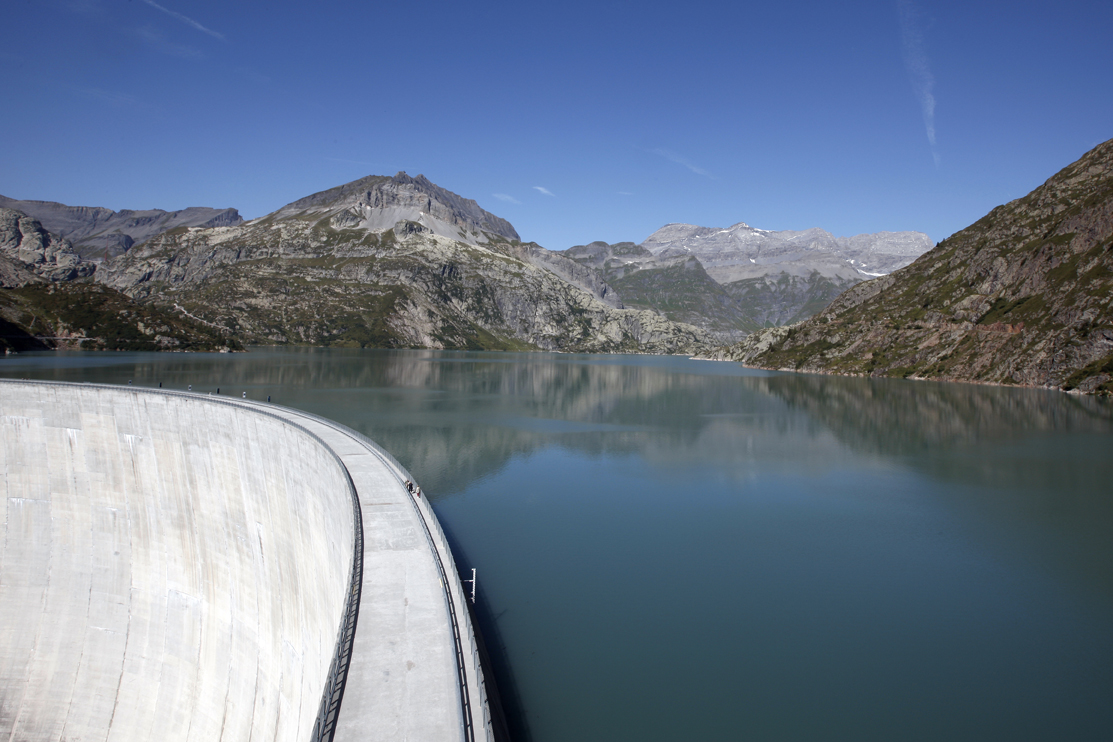
The most revealing Swiss study focused on Lake Sassolo, an uninhabited alpine lake in Canton Ticino. Researchers found an average of 2.6 microplastics and 4.4 fibers per liter in the water column, with sediment showing 33 microplastics per kilogram and 514 fibers per kilogram. This accumulation pattern suggests that microplastics aren’t just passing through—they’re becoming a permanent feature of alpine ecosystems.
How They Get There: Three Pathways
**1. Atmospheric Transport**
A 2019 study analyzing snow in the Arctic, Germany, and the Swiss Alps found microplastics in 20 of 21 samples, with polymer types including varnish, rubber, polyethylene, and polyamide. The particles are light enough to behave like dust, caught in air currents and deposited thousands of kilometers from their source.
Research from EMPA, Utrecht University, and the Austrian Central Institute for Meteorology and Geophysics estimated that around 3,000 tons of nanoplastic particles are deposited in Switzerland annually. About 10% of these originate over 2,000 kilometers away—from the Atlantic Ocean, where wave action introduces marine microplastics into the atmosphere.
**2. Direct Human Activity: Footwear**
But atmospheric fallout isn’t the whole story. The most dramatic evidence comes from direct comparison studies.
In New York’s Adirondacks, data scientist Tim Keyes sampled two alpine lakes at similar elevation, just a mile apart. Lake Tear of the Clouds sits on a heavily trafficked trail to three popular peaks. Moss Pond requires bushwhacking and sees almost no visitors.
The difference was stark: Lake Tear showed 16.54 microplastic particles per milliliter in 2025, compared to just 0.73 particles per milliliter in Moss Pond—a 2,264% difference. When Keyes first sampled Lake Tear in 2023, it measured 9.45 particles per milliliter. In two years, contamination nearly doubled.
“It’s a pretty clear indication given the stark difference in microplastic levels between the sister body of water that’s a bushwhack away compared to Lake Tear, which is on this thoroughfare for hikers that sees tens of thousands of people annually,” Keyes told The Guardian.
Soft-soled trail shoes are the primary culprit. Modern trail runners use polyurethane and synthetic rubber compounds optimized for grip. That grip comes at a cost: abrasion releases microplastic particles with every step.
A 2023 Australian study published in Environmental Pollution quantified this: trail running produces 0.3 to 0.9 microplastic particles per linear meter per runner from footwear alone. Synthetic clothing adds another 0.7 to 2.0 fibers per linear meter. On sloped, rocky terrain—exactly the conditions on alpine trails—shedding rates increase.
**3. Climbing and Mountaineering Equipment**
The Matterhorn sees thousands of climbers annually, most using fixed ropes installed for the season. Modern climbing ropes are kernmantle constructions: a core of twisted nylon 6,6 (polyamide) fibers surrounded by a braided nylon sheath.
Nylon climbing ropes consist of ultra-fine threads—up to 135 filaments twisted together to make core yarns. The sheath adds another protective layer of tightly woven nylon. Every time a climber grabs, clips, or weights a rope, friction causes microscopic fiber shedding.
UV degradation accelerates this process. Extended UV exposure degrades and weakens nylon fibers. Fixed ropes on alpine routes like the Matterhorn’s Hörnli Ridge remain in place for months, exposed to intense high-altitude UV radiation. As the nylon breaks down, it releases both microfibers and chemical additives used in manufacturing.
Mammut’s “Close the Loop” recycling program collected 748 kilograms of used climbing ropes in three months from just Switzerland—a fraction of global rope waste. When those ropes were analyzed, they showed significant fiber loss from abrasion and UV damage.
Ski touring adds another dimension. Ski bases made from ultra-high molecular weight polyethylene (UHMW-PE) wear down on snow and ice, releasing microplastics directly into alpine watersheds. Climbing skins—the adhesive strips that allow uphill travel—typically use polyamide (nylon) or synthetic blends that shed fibers.
The Synergistic Threat
The presence of microplastics in remote environments goes beyond pollution metrics. Recent research reveals disturbing interactions between microplastics and other contaminants.
A University of Birmingham study published in October 2024 exposed Daphnia (water fleas) to realistic levels of both microplastics and PFAS throughout their life cycle. Results showed:
– 59% additive and 41% synergistic toxic interactions
– Developmental failures and delayed sexual maturity
– Egg abortion and reduced offspring production
– More severe effects in populations with prior pollutant exposure
“Current regulatory frameworks focus on testing the toxicity of individual chemicals, mostly using acute (short) exposure approaches,” said Dr. Mohamed Abdallah, co-lead researcher. “It is imperative that we investigate the combined impacts of pollutants on wildlife throughout their lifecycle.”
Many outdoor garments use PFAS-based DWR (durable water repellent) treatments. These “forever chemicals” don’t break down and accumulate in water sources. Switzerland’s Federal Office for the Environment estimates 14,000 tonnes of plastic end up in Swiss soil and water annually, much of it combining with PFAS contamination.
The Human Connection
Twenty percent of Switzerland’s tap water comes from lakes fed by Alpine streams and rivers. Lake Sassolo drains into larger watersheds. Lake Tear of the Clouds is the highest source of the Hudson River. The microplastics accumulating in these headwaters flow downstream into municipal water supplies.
The hiking boom accelerates contamination. When Tim Keyes became the 7,630th person to complete the Adirondack 46 High Peaks in 2012, that roster had taken 87 years to reach. In the 13 years since, it doubled to over 16,000 members. The Department of Environmental Conservation reports nearly 32,000 hiker contacts with summit stewards in 2024 alone.
Similar trends play out across the Alps. Swiss students conducting microplastic research in the Upper Engadine noted that “everyone here at Silvaplana who stops to talk to us tells that we are wasting our time and that we won’t find anything”—a sentiment that reflects how invisible this pollution remains to most visitors.
What Can Be Done?
**For Individual Outdoor Enthusiasts:**
– Choose footwear with harder rubber compounds (Vibram) over soft, sticky rubber
– Wear natural fibers (merino wool, hemp, cotton) when conditions allow
– Layer synthetic base layers under natural fiber outer layers to contain shedding
– Retire worn gear before severe fiber degradation occurs
– Support brands developing low-shed fabrics and PFAS-free treatments
**For the Outdoor Industry:**
– Invest in biodegradable or low-shed synthetic materials
– Develop climbing ropes from recycled nylon (Edelrid’s Neo 3R uses 50% recycled content)
– Eliminate PFAS from DWR treatments
– Design for longevity to reduce replacement frequency
– Implement comprehensive take-back and recycling programs
**For Land Managers:**
– Establish microplastic monitoring in protected areas
– Cap participant numbers in high-traffic wilderness events
– Reroute trails around ecologically sensitive water sources
– Require synthetic fiber containment at climbing areas
– Fund research into environmental impacts and mitigation
**For Policy Makers:**
– Develop regulations limiting harmful polymers in outdoor gear
– Require disclosure of microplastic shedding rates for footwear and clothing
– Fund atmospheric monitoring stations in alpine regions
– Support research into fingerprinting microplastics by source
– Create extended producer responsibility frameworks
The Path Forward
Roman Lehner of the Sail & Explore Association, who oversees microplastics research in the Swiss Alps, emphasizes: “It is important to carry out a study in Switzerland to show that the problem is not limited to the seas”.
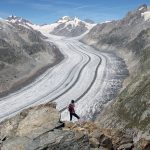
A 2019 study of the Forni Glacier in the Alps found approximately 75 microplastic particles per kilogram of sediment—potentially 162 million plastic particles across the entire glacier. These particles, locked in ice for decades, will be released as glaciers melt under climate change pressure.
Dr. Joe Dadey of Adirondack Hamlets to Huts said it plainly: “Lake Tear of the Clouds is a sacred source of the Hudson, yet our research shows it is already carrying the imprint of microplastics—likely from the very visitors who revere it.”
The journey of microplastics from our gear to the highest peaks is a testament to how deeply our material choices affect even the most remote landscapes. On the Matterhorn, in the Adirondacks, across the Alps—the evidence is mounting. We can no longer claim these places are pristine. The question is whether we’ll change our practices before the contamination becomes irreversible.
The mountains are still beautiful. The lakes still look clear. But under the microscope, the story is different. And it’s a story we’re writing with every step we take into the wilderness.
### Key Facts: Alpine Microplastic Contamination
Swiss Alps Research
- Lake Sassolo (2,074m, Ticino): 2.6 microplastics/L, 4.4 fibers/L in water; 33 microplastics/kg, 514 fibers/kg in sediment
- Annual deposition: ~43 trillion particles across Switzerland; ~3,000 tons of nanoplastics
- Soil contamination: 90% of samples from 29 catchment areas contained microplastics
- Alpine snow: 0.19×10³ to 154×10³ particles/L (European sites)
- Atmospheric range: ~10% of particles travel >2,000km from source
Adirondack Mountains Comparison
- Lake Tear of the Clouds (trafficked): 16.54 particles/mL (2025); 9.45 particles/mL (2023)
- Moss Pond (remote): 0.73 particles/mL
- Difference: 2,264% higher in trafficked area
- Growth rate: 75% increase in 2 years
Primary Polymer Types Identified
- Polyethylene (PE) – ski bases, packaging
- Polyamide/Nylon (PA 6, PA 6.6) – climbing ropes, clothing, skins
- Polyurethane (PU) – shoe soles, foam padding
- Polyester (PET) – synthetic clothing
- Polypropylene (PP) – rope cores, some clothing
- Rubber compounds – tire particles, shoe soles
### Equipment Sources & Shedding Rates
Footwear (Primary Source)
- Trail running shoes: 0.3-0.9 MPs/linear meter/runner
- Main polymers: Polyurethane (PU), thermoplastic polyurethane (TPU), synthetic rubber
- Increased shedding: Sloped terrain, rocky surfaces, soft compounds
Clothing (Secondary Source)
- Synthetic garments: 0.7-2.0 fibers/linear meter/person
- Highest shedding: Running tights/leggings > shirts > shells
- Main polymers: Polyester, nylon, spandex/elastane
Climbing Ropes
- Construction: Nylon 6,6 (PA 6.6) kernmantle (core + sheath)
- Core composition: 10-15 braided nylon strings, each made from up to 135 filaments
- Degradation: UV exposure, abrasion from use, weathering
- Fixed ropes: Extended exposure on alpine routes accelerates fiber loss
- Waste generation: 748kg collected in Switzerland in 3 months (Mammut program)
Ski Touring Equipment
- Ski bases: Ultra-high molecular weight polyethylene (UHMW-PE)
- Climbing skins: Polyamide (nylon), mohair blends, adhesives
- Release mechanism: Abrasion on snow/ice, particularly on rocky terrain
PFAS Co-Contamination
- Source: DWR (durable water repellent) treatments on shells, tents, gloves
- Synergistic effect: 41% more toxic when combined with microplastics
- Persistence: Does not degrade; accumulates in water sources
### Research Sources & Studies
Swiss Alps Studies
– **University of Bern (2018):** 90% of soil samples from 29 catchment areas contained microplastics
– **Lake Sassolo Study (2020):** Water column and sediment analysis, Canton Ticino
– **EMPA/Utrecht/Austrian Meteorology (2022):** Nanoplastic atmospheric transport and deposition
– **Science Advances (2019):** Snow sampling across Arctic, German, and Swiss Alps
Adirondack Mountains Study (2023-2025)
– **Lead Researchers:** Tim Keyes (Sacred Heart University), Joe Dadey (Adirondack Hamlets to Huts)
– **Lab Analysis:** Parverio, Inc.
Trail Running Impact (2023)
– **Published:** Environmental Pollution, April 2023
– **Location:** Australia
– **Findings:** Quantified microplastic shedding rates from footwear and clothing
Synergistic Toxicity (2024)
– **Published:** Environmental Pollution, October 2024
– **Institution:** University of Birmingham
– **Lead:** Dr. Luisa Orsini, Dr. Mohamed Abdallah
– **Focus:** Combined PFAS and microplastic effects on aquatic organisms
Alpine Glacier Study (2019)
– **Location:** Forni Glacier, Alps
– **Institution:** University of Milan
– **Finding:** ~75 particles/kg sediment; ~162 million particles across glacier
### Solutions in Progress
Industry Initiatives
– **Edelrid Neo 3R:** First climbing rope with 50% recycled nylon content
– **Mammut Close the Loop:** Rope recycling program collected 748kg in 3 months
– **Aquafil Econyl:** System converting nylon waste into regenerated fibers
Recommended Actions for Alpine Visitors
– Use harder-compound shoe soles (accept slightly less grip for durability)
– Choose merino wool or other natural fiber base layers
– Limit synthetic shell use to necessary conditions
– Inspect and retire heavily worn gear before severe degradation
– Support brands eliminating PFAS and developing low-shed materials
– Participate in rope and gear recycling programs