
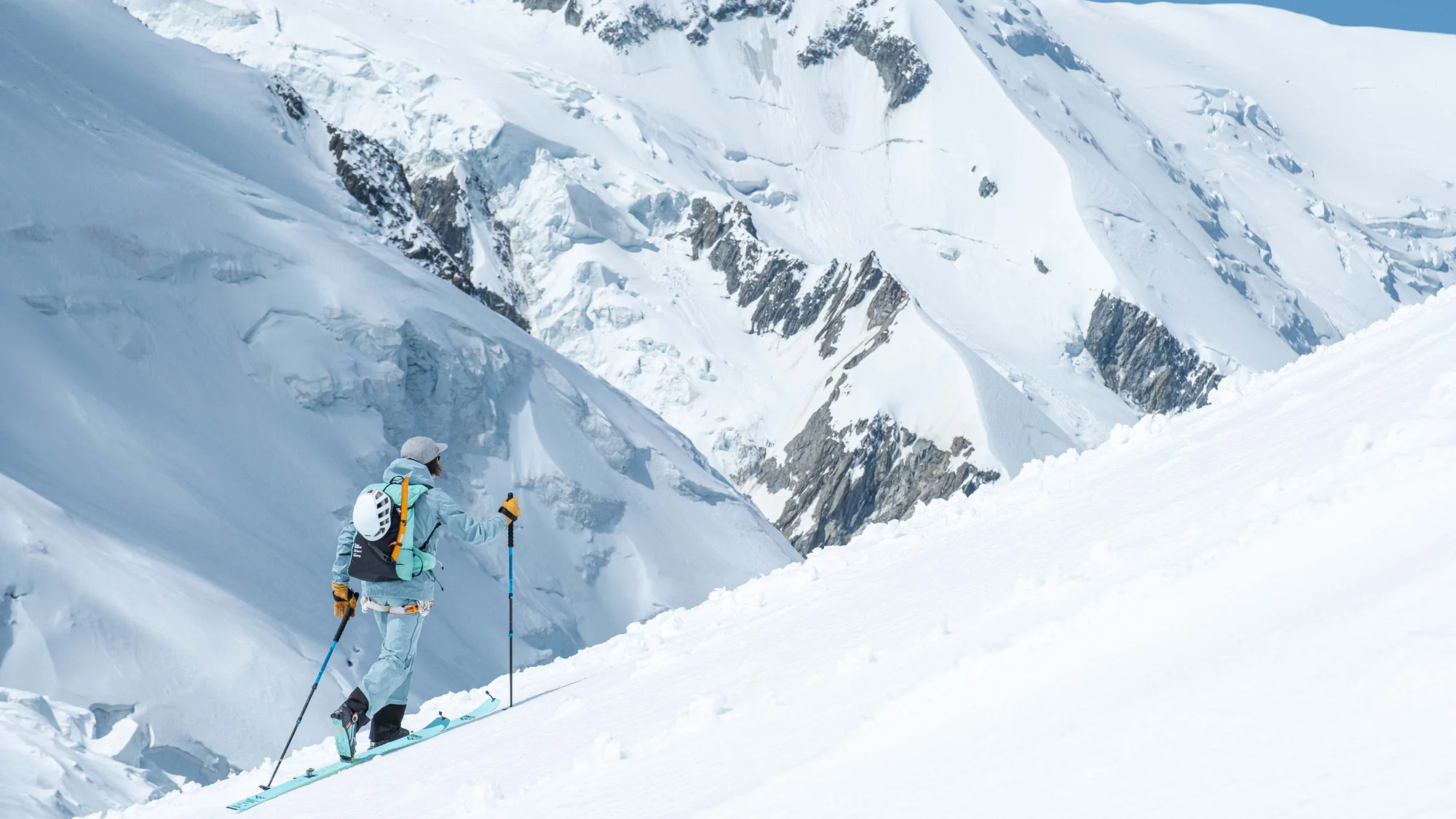
Every winter, the line between ski touring and free touring blurs a little more. The best hardware of 25/26 doesn’t just shed grams — it balances uphill efficiency with downhill precision, allowing skiers to move fast and light without compromise. From sub-1,000 g skis to bindings that lock in confidence at speed, this year’s innovations push alpine touring deeper into performance territory.
New Season, New Lines: Touring Skis for Winter 2025/26
The touring ski landscape continues to split in two directions. On one hand, brands are shaving grams, refining carbon layups, and chasing uphill efficiency for long-distance objectives. On the other, there’s a clear move toward wider, damper platforms that feel closer to freeride skis but still climb with skins. The 2025/26 releases reflect both trends — a series of nuanced evolutions rather than one big revolution.
Black Crows Mentis Freebird 2.0
Black Crows’ lightest touring ski gets a quiet but meaningful rebuild. The Mentis was already a cult favourite among skimo-inspired ski tourers, but the new version drops weight without feeling nervous underfoot. A revised paulownia/carbon construction stiffens the mid-section, while the flex at the tip has been softened to ease trail-breaking. It’s still narrow at 80mm underfoot, but this season’s ski feels less skittish and a touch more forgiving in mixed snow.
Sidebar specs:
Dimensions: 113-80-99mm
Lengths: 157, 164, 171, 178cm
Weight: ~850g (171cm)
Best for: Fast, light, big days

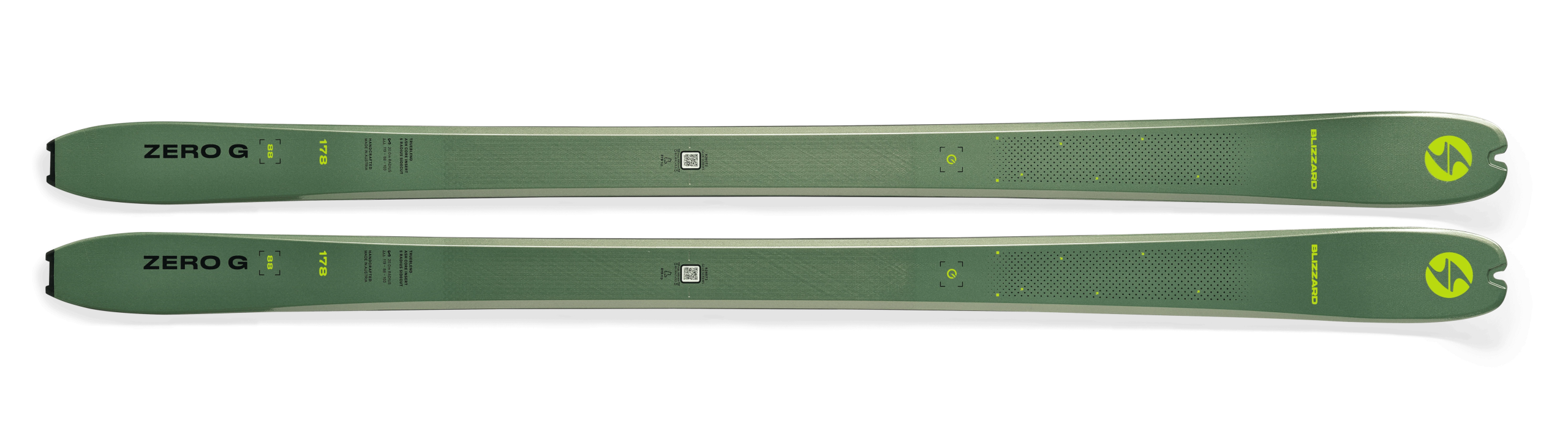
Blizzard Zero G LT 88
Blizzard’s Zero G series has long been a benchmark in the weight-to-stability category. For 25/26, the new Zero G LT 88 replaces the outgoing “UL” line. A lighter core and reshaped Carbon Drive layup bring the ski in under a kilo per ski, yet it’s still remarkably composed when the descent gets serious. Testers noted a smoother initiation in breakable crust — historically a weak point for ultralight skis. If you spend most of your winter linking cols on the Haute Route, this is the new standard bearer.
Dimensions: 121-88-105mm
Lengths: 164, 171, 178, 185cm
Weight: ~990g (171cm)
Best for: Big traverses, technical missions
Dynastar M-Tour 100 Team
Dynastar’s M-Tour 100 F-Team is a dedicated touring ski that strikes a balance between lightweight design and all-terrain versatility. It is designed for skiers seeking a reliable and agile ski for various backcountry conditions.
- Core Construction: Poplar/PU Hybrid Core 2.0 Light for a damp, durable, and stable ride.
- Sidewalls: Full sandwich sidewall construction for enhanced edge grip and durability.
- Rocker Profile: Progressive tip and tail rocker with camber underfoot for improved flotation in powder and maneuverability in varied conditions.
- Base: Sintered HD base for excellent glide in all snow conditions.
- Weight: Approximately 1,515g per ski at 186 cm length.
- Lengths Available: 162, 170, 178, 186 cm.
- Dimensions: 132-98-122 mm at 162 cm length.
- Turn Radius: 15m at 162 cm length.
- Skin Fix: Rounded tips with notched tails for secure skin attachment.
This ski is handmade in France, reflecting Dynastar’s commitment to quality and performance.

Kästle TX103 Pro
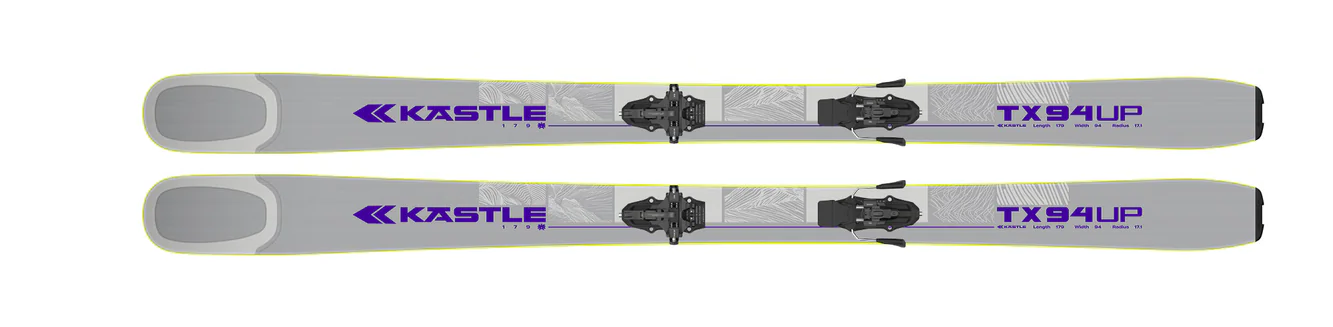
Kästle pushes further into the freeride-touring niche with the new TX103 Pro. At 103mm underfoot, it’s the widest ski in their touring collection to date. The goal: freeride performance without committing to frame bindings or full alpine setups. Carbon stringers run tip-to-tail for torsional stiffness, and a new semi-cap sidewall gives more bite on edge than the earlier TX98. On test in Innsbruck this spring, it felt like a ski that freeriders could trust for big lines without hauling a full freeride setup on the climb.
Dimensions: 135-103-123mm
Lengths: 170, 178, 186cm
Weight: ~1500g (178cm)
Best for: Powder touring, steep freeride
Movement Alp Tracks LT 90
Movement’s Alp Tracks skis have always been a boutique, hand-built option for those who want featherweight touring gear without compromise. The new LT 90 shaves more grams through a carbon-weave evolution, but the real story is in feel. Despite being just over 1kg per ski, the LT 90 rides with a quiet dampness unusual in this class. Movement claim the carbon orientation is tuned like a musical instrument, with vibration absorbed at specific frequencies. Whether or not you buy the marketing, testers consistently noted less chatter on hardpack compared to competitors.
Dimensions: 122-90-111mm
Lengths: 162, 170, 178cm
Weight: ~1080g (170cm)
Best for: Weight weenies who still care about the down
What stands out this season is refinement. No wild new shapes, no disruptive categories — just a steady march toward skis that balance uphill efficiency with credible downhill feel. For ski tourers, the 25/26 crop represents a maturing market: lighter skis that don’t feel twitchy, wider skis that still climb, and a clear recognition that most of us want both in one quiver.

Touring Boots 2025/26 – Smarter Walk, Stronger Ski
If skis are the visible face of touring innovation, boots are the hidden engines — the place where marginal weight drops and millimetre-level tweaks genuinely change the feel of a long approach or a steep descent. For 2025/26 the boot market feels less like a revolution and more like a measured refinement, but the gains are real: walk modes that don’t slop out after a season, liners that actually dry in a hut, and shells trimmed to shave 100 grams without losing the ability to drive a ski at speed.
Scarpa remains the category leader, and the new F1 Evo shows why. The name is familiar, but the redesign runs deep: lighter Grilamid/Carbon shell layups, a completely revised tongue with better overlap, and a much smoother walk mode engagement that feels solid at the cuff but flicks open with minimal effort on the skintrack. Scarpa claims a 60° range of motion, but what stands out is how little resistance there is at the end of each stride — the boot feels less like a stripped-out race shoe and more like a natural extension of your ankle.
Atomic, meanwhile, has overhauled the Backland XTD Carbon line. The pitch is simplicity: a two-buckle plus powerstrap configuration with the same Free/Lock 5.0 walk mechanism found on their heavier freeride hybrids. The fit is roomier in the forefoot, and the boot comes pre-mounted with a touring-friendly GripWalk sole. At just under 1200g, it’s aimed squarely at skiers who want a single boot to pull double duty between long traverses and occasional lift-served days.
Dynafit continues to push its own line of thinking with the updated TLT X Tour Pro. Weight is down again — now flirting with sub-1000g in the lightest shell size — but what really changes the feel is the re-worked Twistfit closure. It uses a full-length cable system that tightens both instep and heel in one crank, cutting down transition time and eliminating dead space often left by minimalist buckle layouts.
Lange’s new XT3 Tour Light marks a push to convince piste-loyal skiers to take touring more seriously. Borrowing heavily from their alpine boots, Lange’s design delivers a proper progressive flex. At around 1450g, it’s not the lightest, but for riders who ski hard and want a 50° walk mode, it could be a tipping point.
The common thread across these launches is that touring boots are moving past the old compromises. Five years ago you either carried a stiff boot uphill or floated up in a carbon slipper hoping it wouldn’t collapse. For 2025/26, the middle ground feels more solid: walk ranges beyond 55°, liners that don’t pack out, and shells stiff enough to carve without chatter.
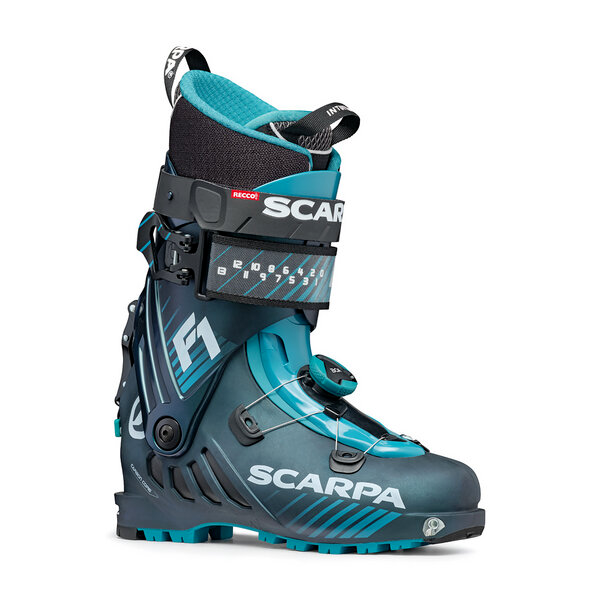
Scarpa F1 Evo – A Classic Reborn
– Weight: ~1,210g
– Walk Mode: 72° cuff rotation
– Shell: Grilamid / Carbon
– Best For: Fast, lightweight touring, precise ski control
The Scarpa F1 Evo has been fully rethought with a new Grilamid/Carbon shell, a smoother walk mode, and a single-motion transition lever. It drives a 95mm ski confidently and feels like a natural extension of your ankle on the skin track.
Atomic Backland XTD Carbon
– Weight: ~1,200g
– Walk Mechanism: Free/Lock 5.0
– Fit: Roomier forefoot
– Best For: All-round touring, occasional resort days
Atomic’s new Backland XTD Carbon is simple, lightweight, and versatile. The two-buckle plus power strap system makes transitions quick, and GripWalk soles make both touring and lift-served days comfortable.


Dynafit TLT X Tour Pro
– Weight: sub-1,000g
– Closure: Twistfit cable system
– Best For: Speed-focused alpine tours
The TLT X Tour Pro reduces weight while improving instep and heel control with the Twistfit cable system. Transition times are cut and the boot handles long traverses efficiently.
Lange XT3 Tour Light
– Weight: ~1,450g
– Walk Mode: 50°
– Best For: Piste skiers transitioning to touring
Lange’s XT3 Tour Light combines alpine flex with touring capability, delivering a proper progressive flex and an easy walk mode. Ideal for skiers seeking versatility over ultralight weight.
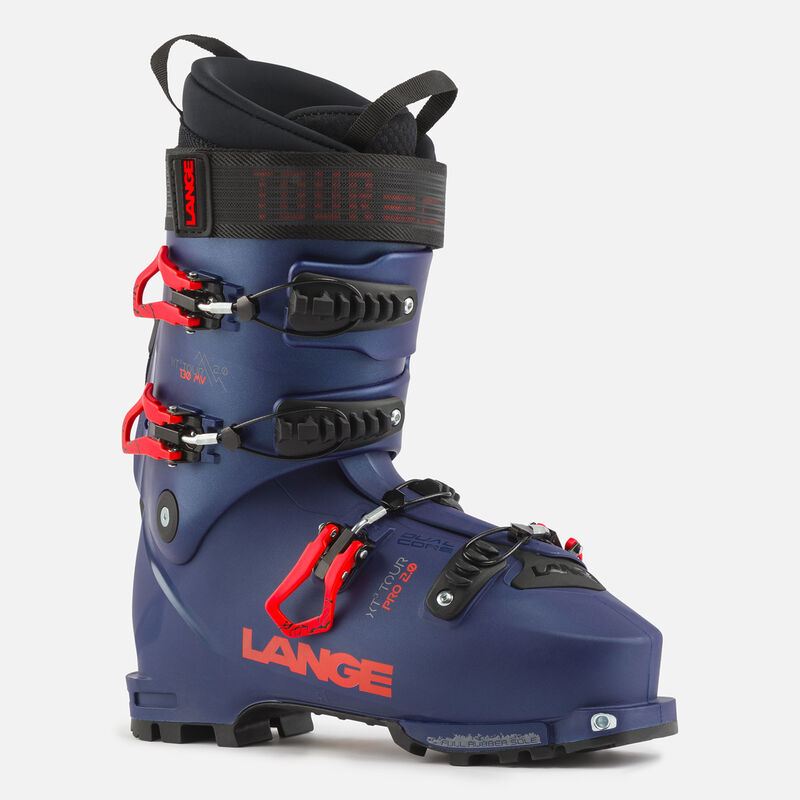
Bindings 2025/26 – The Quiet Revolution Underfoot
Bindings rarely steal headlines in ski touring, but they dictate everything: how efficient your stride feels uphill, how confident you are downhill, and how reliable your release is when the mountain throws a surprise. For winter 2025/26, the big brands focus on three fronts: ease of use, downhill security, and controlled weight.
The quiet revolution continues: lighter frames, more reliable release values, and subtle innovations that make touring setups intuitive, confidence-inspiring, and versatile across ski widths and skier types.
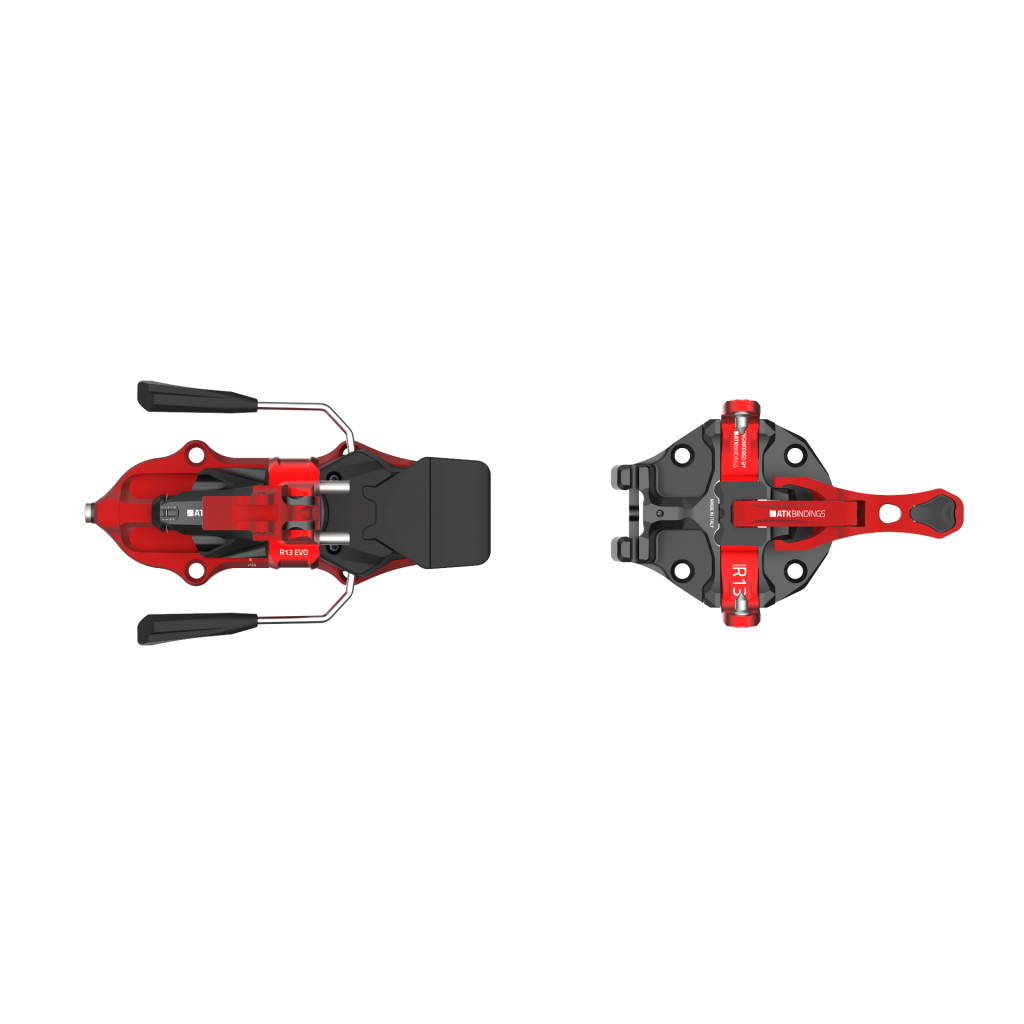
ATK Raider Evo 11/13
– Weight: 370 g
– Release: 5–13
– Features: Auto brakes, Elastic Response heel track, wider mounting for 105–110 mm skis
– Best For: Precision-focused skiers, guides, and big alpine traverses
ATK’s Raider Evo is micro-engineered perfection. Automatic brakes, crisp toe positions, and a spring-loaded heel track give consistent release without compromising ski flex absorption.
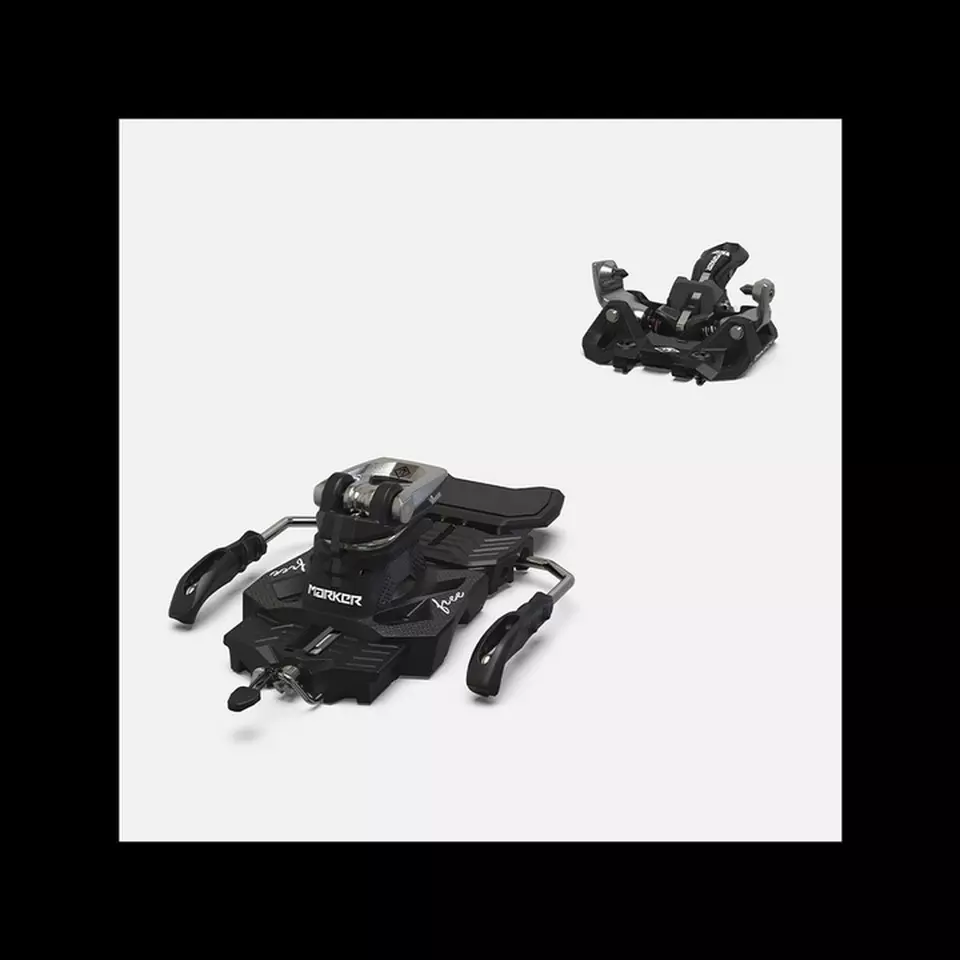
Marker Alpinist Free – Versatility in the Backcountry
– Weight: 395 g
– Features: Classic Alpinist riser system, improved step-in
– Best For: Recreational touring, quiver-of-one setups
Marker’s Alpinist Free binding is designed for skiers seeking versatility. Weighing 395g, it offers DIN settings of 4–11 and 6–13, making it suitable for a wide range of skiers. The binding features a wider base for improved power transmission and is compatible with a 105mm brake, enhancing its adaptability to various ski widths.
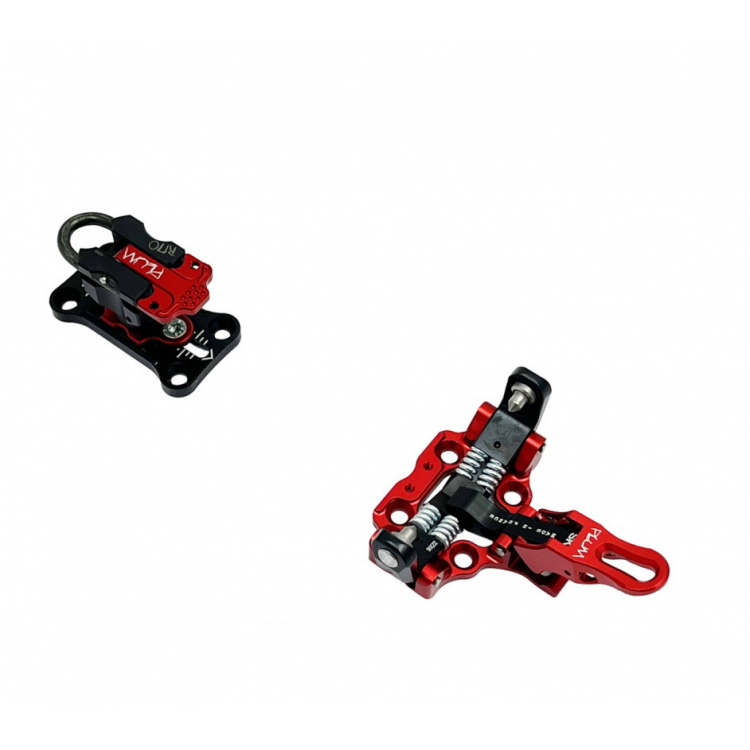
Plum R170 Evo
– Weight: 170 g
– Release: ~8 fixed
– Features: Ultralight, machined aluminium, two-position heel riser
– Best For: Skimo racing, high alpine routes
Plum remains the minimalist’s choice. The R170 Evo keeps the classic race-ready design, slightly beefed-up for reliability, proving that sometimes the best move is knowing when not to change.

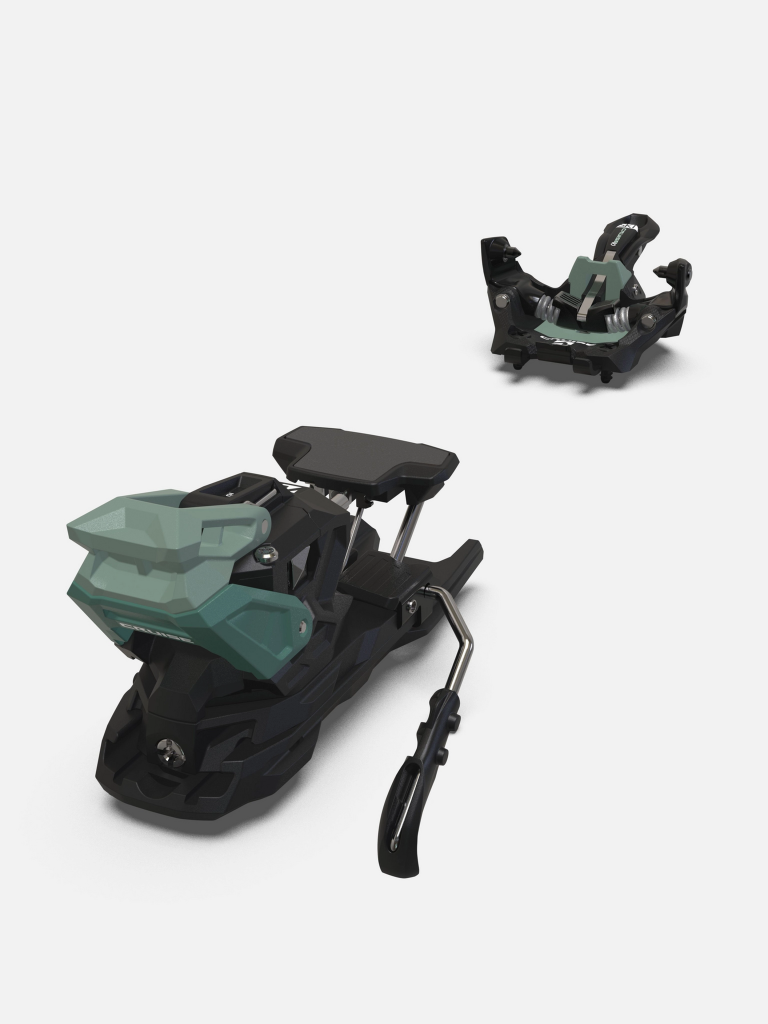
Dynafit Superlite 175+
– Weight: 175 g (without brake)
– Release: 6–12
– Features: Optional ski-brake, adjustable release heel, crampon slot
– Best For: Skiers chasing vertical without compromising knee safety
The 175+ expands the Superlite range for purists seeking downhill security in a lightweight package. Optional brakes and adjustable heel release make it suitable for both race and alpine touring scenarios.
Marker Cruise 10
– Weight: ~495 g
– Release: 4–10
– Features: Integrated ski-brake, wider screw pattern for torsional stability, low-friction toe
– Best For: Recreational touring, hut-to-hut enthusiasts
Marker Cruise 10 sits in the mainstream touring market: reliable, easy to step into, and versatile for varied conditions. It balances lightweight performance with stout downhill security for mixed snow types.
Poles & Skins — Unsung Heroes of Touring Gear
In the hierarchy of ski touring essentials, skis might draw the most attention, but poles and skins quietly define the rhythm of your movement and the feel of your ascent. For winter 2025/26, subtle material updates and functional tweaks are redefining usability, reliability, and efficiency—without ever calling attention to themselves.
Touring Poles — Grip, Length, and Reliability
This season, innovation in poles is less about width or weight and more about intuition. The bâtons d’Alain concept—extending foam grips far down the shaft—continues to gain traction. Whether navigating traverses or kick-turning steep faces, the ability to shift your lower hand grip without wrangling straps offers immediate ergonomic payoff.
Brands like Black Diamond,and Komperdell are enhancing this concept with more resilient EVA foams that resist icing and withstand colder conditions. Models like the Black Crows Duos Freebird embrace simplicity: a reliable two-piece design with extended foam grip and robust baskets remains a proven option for long tours.
In contrast, the minimalist racing crowd sees growth in collapsible carbon poles—Dynafit Ultra Tour being one standout. These offer exceptional packability and light swing weight, particularly appealing for fast-packers and racers where every gram and every fold matters.
Bracketed within these designs is refined basket technology: stiffened, compact baskets that still offer float in soft snow but lessen failing in aggressive, frozen skintrack conditions. It’s these quieter updates that preserve integrity—rather than glamorous upgrades.
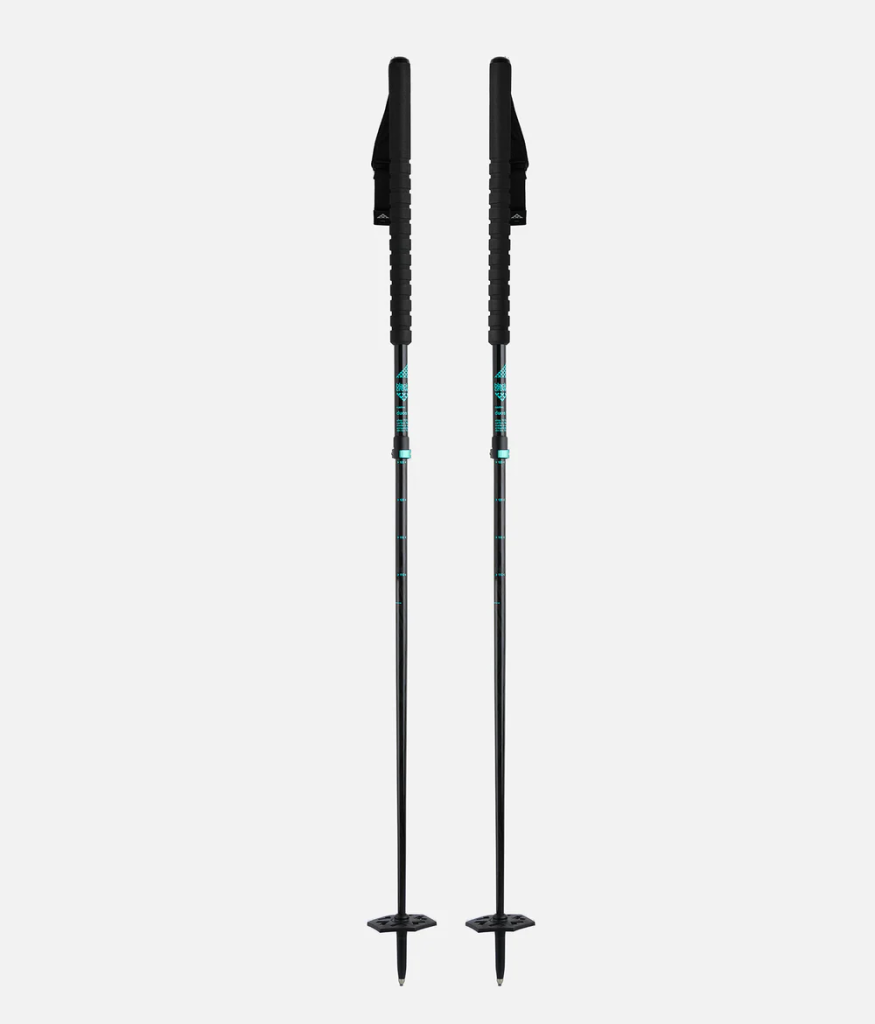
Black Crows Duos Freebird
– Type: Two-piece touring pole
– Features: Extended foam grip, robust basket, lightweight yet sturdy
– Best For: Long tours, cold-weather reliability
The enduring bâtons d’Alain design continues to improve: long foam grips allow easy hand adjustments, saving rhythm and energy. Durable EVA foams resist icing, and reinforced baskets handle refrozen tracks.
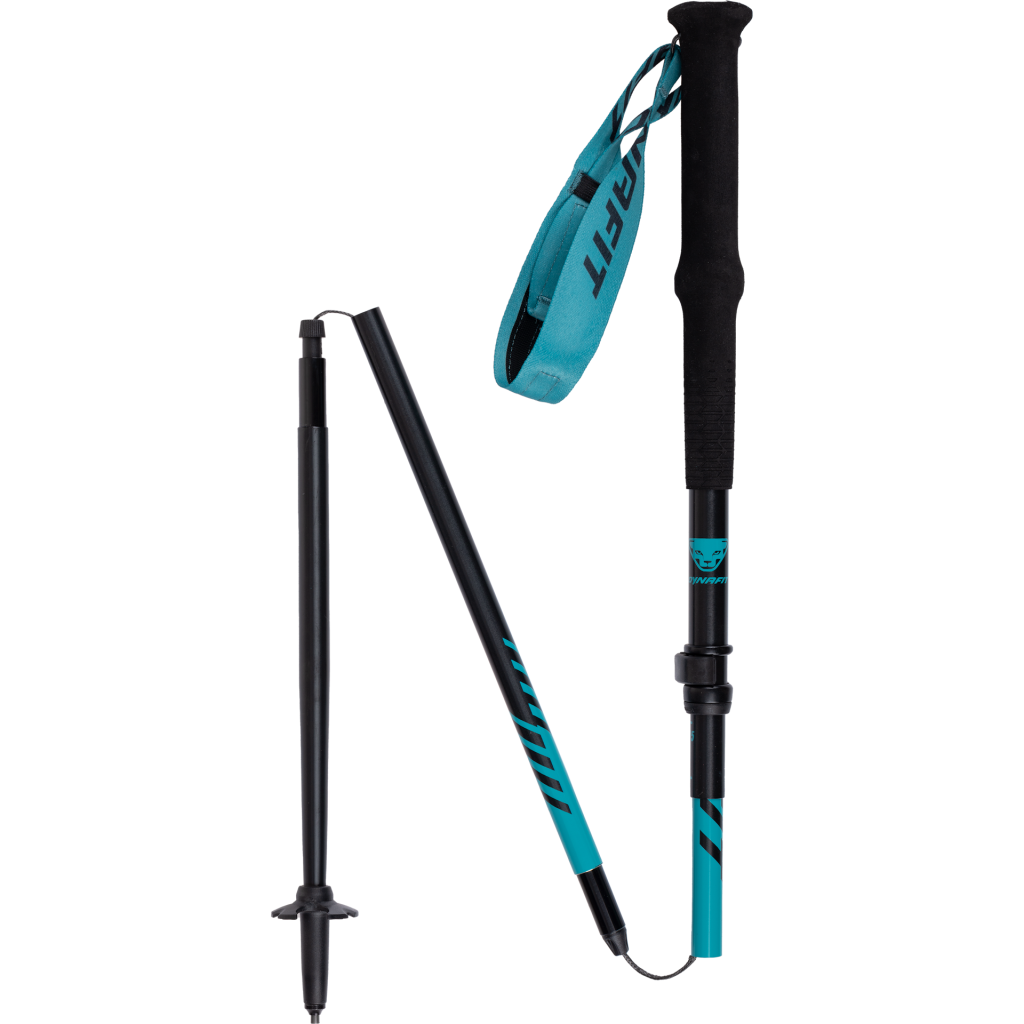
Dynafit Ultra Tour
– Type: Collapsible carbon pole
– Features: Minimal swing weight, ultra-light, packable
– Best For: Race and endurance touring
Designed for racers and fast-packers, the Ultra Tour maximizes packability and low swing weight. Durability is secondary to portability, ideal for alpine speed-focused tours.
Poles – Embracing the Long-Grip Revolution
In the evolving landscape of backcountry skiing, the traditional telescoping pole is being overshadowed by a more intuitive and efficient design: the fixed-length, long-grip pole. Pioneered in the rugged terrains of Chamonix by mountain guide Alain Desez, Les Bâtons d’Alain have garnered acclaim for their simplicity, durability, and ergonomic benefits.
Crafted from a single strand of anodized 7075 aluminum, these poles eliminate the complexities and potential failures associated with adjustable mechanisms. The extended 70 cm EVA foam grip allows skiers to adjust their hand position effortlessly, adapting to varying terrains without the need to adjust pole length. This design is particularly advantageous during steep ascents, traverses, or when navigating technical terrain, where quick shifts in grip are essential.Aventure Nordique
Weighing approximately 205g per pole (410g per pair for the 125 cm model) without baskets, they strike a balance between lightweight construction and robust performance. The poles come equipped with interchangeable baskets—85 mm for snowy conditions and 38 mm for dry terrain—allowing users to customize their setup based on the environment. Additionally, the tungsten carbide tips provide excellent traction and durability on various surfaces.Zagskis+2Zagskis+2SkyRun+5Zagskis+5Zagskis+5SkyRun+4Aventure Nordique+4Varuste+4
A notable feature of these poles is the absence of wrist straps. While this might seem unconventional, it enhances safety by reducing the risk of entanglement in avalanche scenarios and allows for a more natural hand movement along the grip. Moreover, the ergonomic design and extended grip contribute to reduced fatigue during long tours, as they promote a more natural wrist position.Guerdin
The versatility of Les Bâtons d’Alain extends beyond ski touring. Their design is equally suited for trail running, hiking, and mountaineering, making them a multi-functional tool for alpine enthusiasts. The poles’ aesthetic appeal, combined with their practical features, has made them a favorite among guides and professionals in the Alps and beyond.Télémark Pyrénées+5Guerdin+5UK Climbing+5
The Les Bâtons d’Alain poles represent a significant shift towards simplicity and functionality in backcountry gear. Their thoughtful design addresses the dynamic needs of alpine adventurers, offering a reliable and efficient tool for various terrains and conditions.
Skins — Glide, Grip, and Smarter Systems
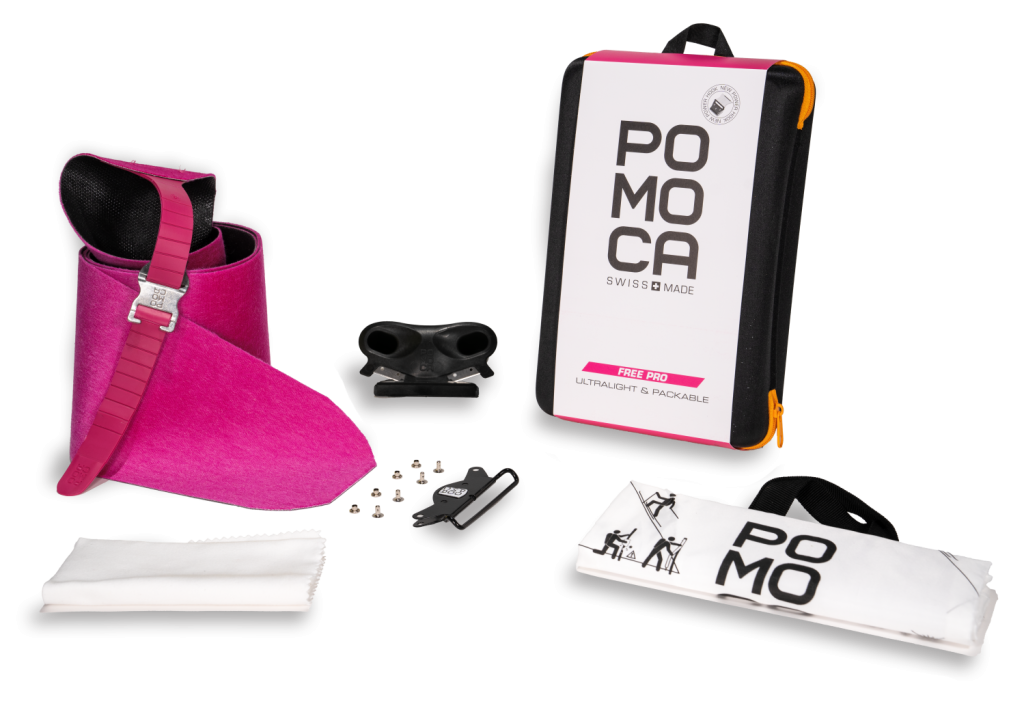
Skins are experiencing one of their most meaningful upgrades in years, focusing on motion efficiency and adhesion performance. Pomoca’s Free Pro 2.0 introduces a finer mohair–nylon weave that improves glide on approach—each conserved calorie adding up over long days. Contour and Colltex deliver new plush blends tuned for sustained uphill traction and faster slide.
But perhaps the most visible changes come in the hardware: traditional tip loops are being replaced by stronger, integrated systems. Pomoca’s Click Lock and Contour’s Hybrid Adhesion anchoring methods deliver waterproof durability and clean peel even in sub-zero conditions, resolving the common frustration of frozen glue sheets. Additionally, for splitboard users, Kohla further bridged compatibility gaps with adaptive tip fittings.
Another noteworthy trend is the expansion of pre-cut touring skins sold as matched sets to ski models. While this convenience aligns with consumer laziness (in a good way!), purists still prize trimmed skins for precision and multi-ski compatibility.
Pomoca Free Pro 2.0
– Type: Mohair/Nylon touring skin
– Features: Finer fiber finish for glide, solid uphill grip, Click Lock system
– Best For: Long-distance touring
Pomoca’s latest blend improves glide without sacrificing grip. The Click Lock attachment holds in wet conditions and peels cleanly in cold, avoiding frozen glue frustrations.

Contour Hybrid Mix
– Type: Touring skin
– Features: Improved adhesive, easy handling in cold/wet conditions
– Best For: Backcountry reliability
Contour’s hybrid system replaces the traditional tip loop for better grip and ease of use. The plush mix balances glide and uphill traction for multi-day efficiency.
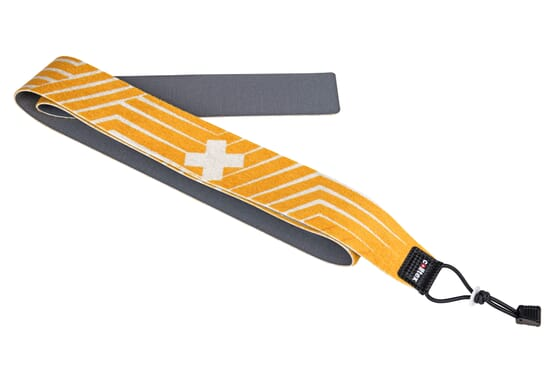
Colltex CT Race
– Type: Race-oriented skin
– Features: Mohair-rich plush, lightweight
– Best For: Endurance touring
Colltex continues to prioritize mohair for fast glide while keeping uphill traction sufficient for endurance climbs. Minimalist design keeps weight low without sacrificing performance.
Durability vs Weight — The Real Balance
In poles and skins, the ultra-light narrative—carbon shafts under 150 g, race-grade skins with tissue-thin plush—still exists, but it’s increasingly balanced by the realities of backcountry life. Breakage or adhesive failure can ruin an entire trip. Guiding professionals overwhelmingly prefer the added resilience of aluminum–carbon hybrid poles and mohair-rich plush mixes near 65%.
For 2025/26, most sensible setups fall into a golden middle: slightly heavier than top-tier race gear, yet significantly more durable and user-friendly for actual conditions. These are tools that work—without showing off.
Poles and skins might not headline your gear check, but they’re what keep everything functioning when technology is buried in deep snow or malfunctioning at altitude. The updates in 2025/26 may be small, but they’re thoughtful—and in the backcountry, that’s exactly what counts.