
The Rhône Valley in the Swiss canton of Valais has a peculiar feature near the village of Fully: an old funicular line that poses a stark question—how fast can a human move straight up? The answer, on 18 October 2025, came from Swiss mountain runner and ski-mountaineer Rémi Bonnet. He climbed 1,000 meters of vertical gain in 27 minutes 21 seconds on the 1.92-kilometer course of the Kilomètre Vertical de Fully, shattering the previous world record by more than 90 seconds.
“I didn’t think it was possible. I have done this climb fifty times in my career, and I felt today might be special.” — Rémi Bonnet
Bonnet, 30, from Charmey in the Gruyère district, had already secured the world title in vertical running weeks earlier in Canfranc, Spain. But the Fully performance was different: part competition, part laboratory, part self-expression.
It wasn’t just the time that stunned. It was the context. The route starts at La Belle-Usine (500m elevation) and finishes at Les Garettes (1,500m) via an old funicular line with average gradients exceeding 50 percent and peaks approaching 60 percent. Poles are mandatory. The track is no ordinary trail—it’s a vertical sprint against the mountain.
### The Build-Up and the Margin
In the days before competition, Bonnet ran a reconnaissance on 12 October, recording 28’29” on the route—already faster than the official mark of 28’53” set in 2017 by Italian Philip Götsch. That run appeared on his Strava feed and generated early buzz: if he was ready for 28’29” before race day, could he break into the 27-minute zone under race conditions? The answer: yes.
Alleys of green-vine terraces give way to forest, and forest gives way to what feels like a staircase carved into the mountain. At every step the stakes climb: breathing gets harder, lactic acid builds, and the mind questions whether full speed is sustainable. Bonnet, standing 1.82m and weighing 61kg, is built for this tension, with ski-mountaineering roots that train uphill mechanics and downhill recovery in equal measure.
On race day, conditions cooperated: cool, steady, no storms. The gradient remained merciless. Race organizers noted that the 2025 edition had “the best conditions the line has seen in years.” As Bonnet crossed the finish, arms raised, the timer read 27:21—a new world record for a vertical kilometer, breaking Götsch’s mark by 1 minute 32 seconds.
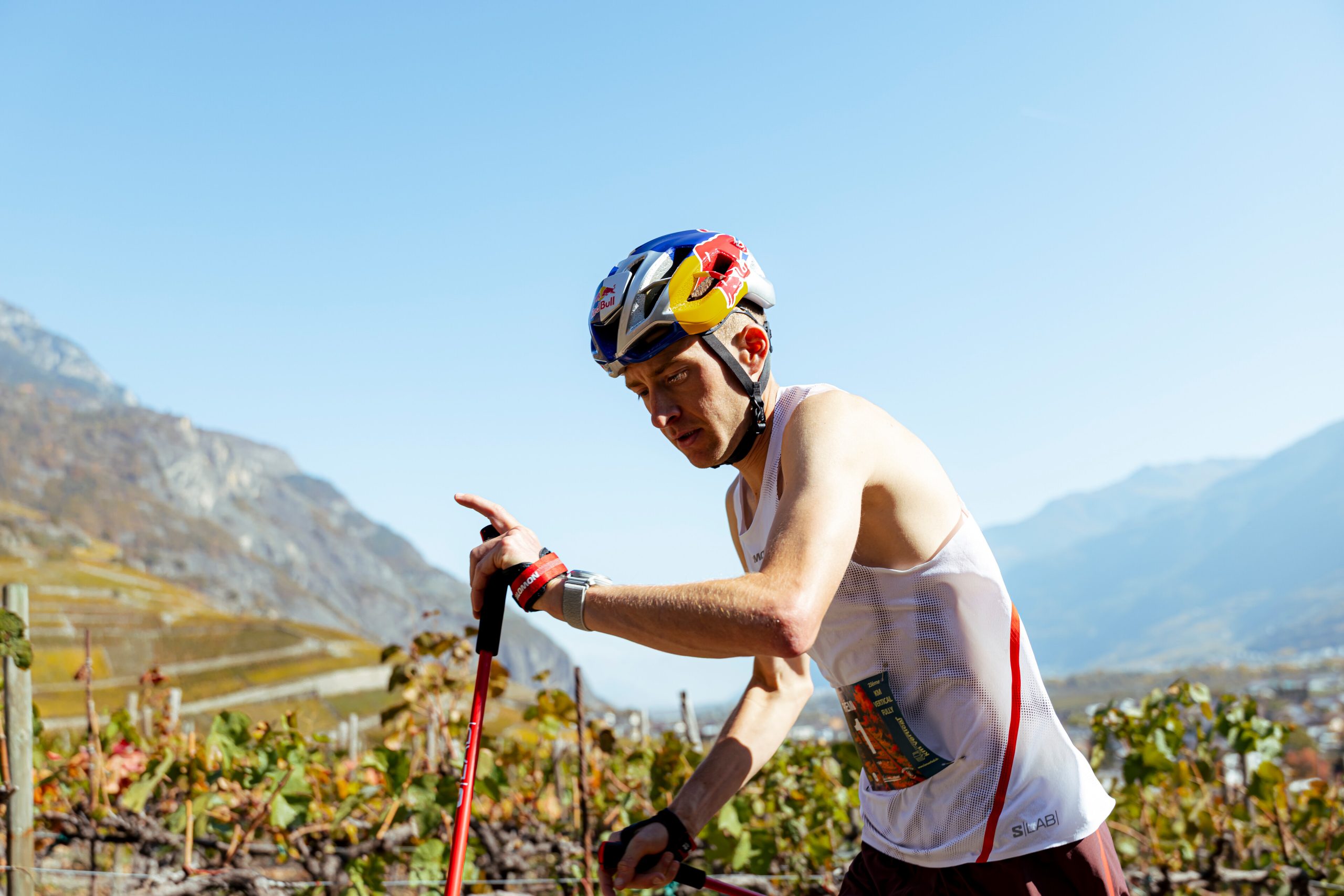
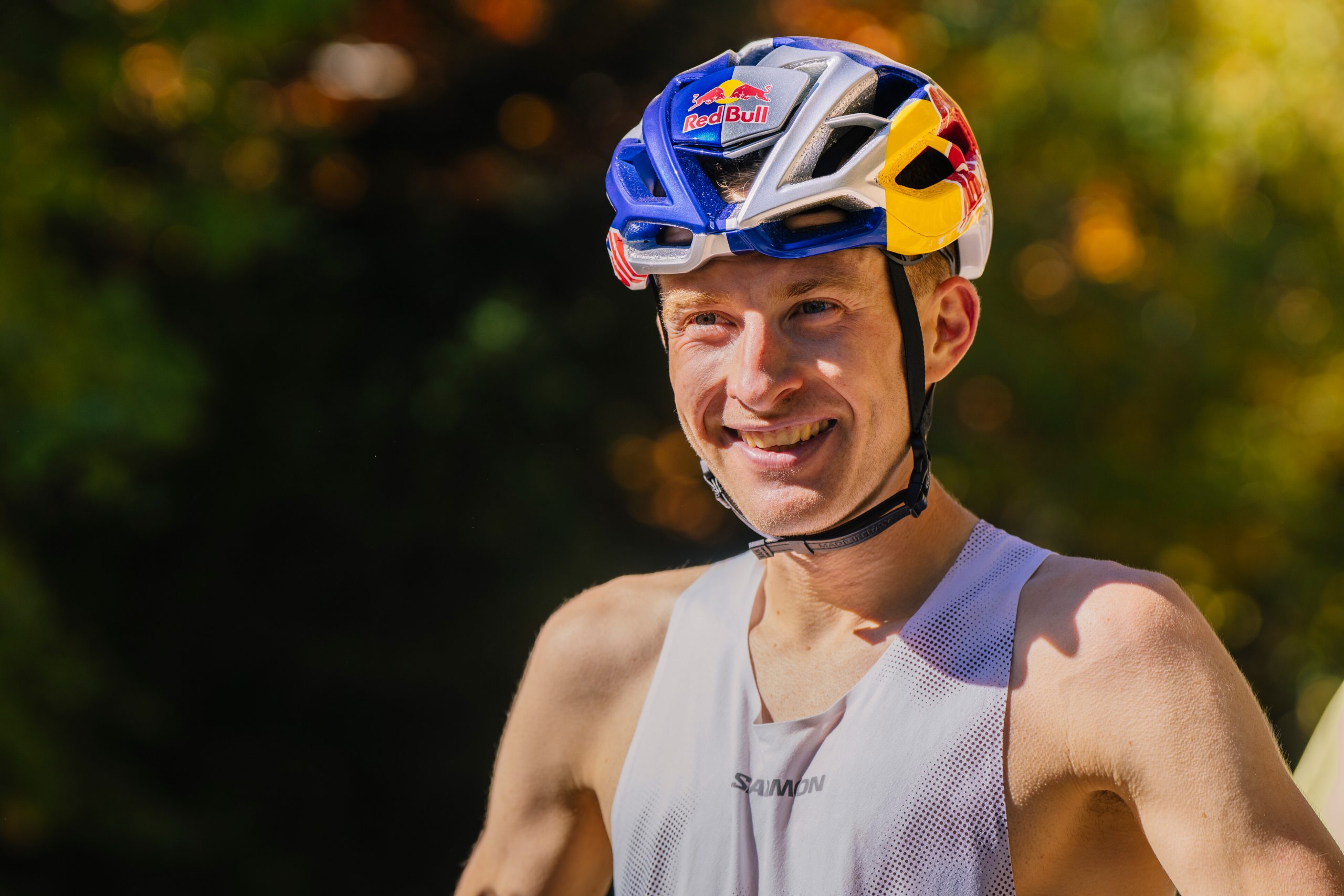
Photo: Rémi Bonnet climbing the Vertical Kilometer at Fully. Credit: Baptiste Fauchille / Red Bull Content Pool
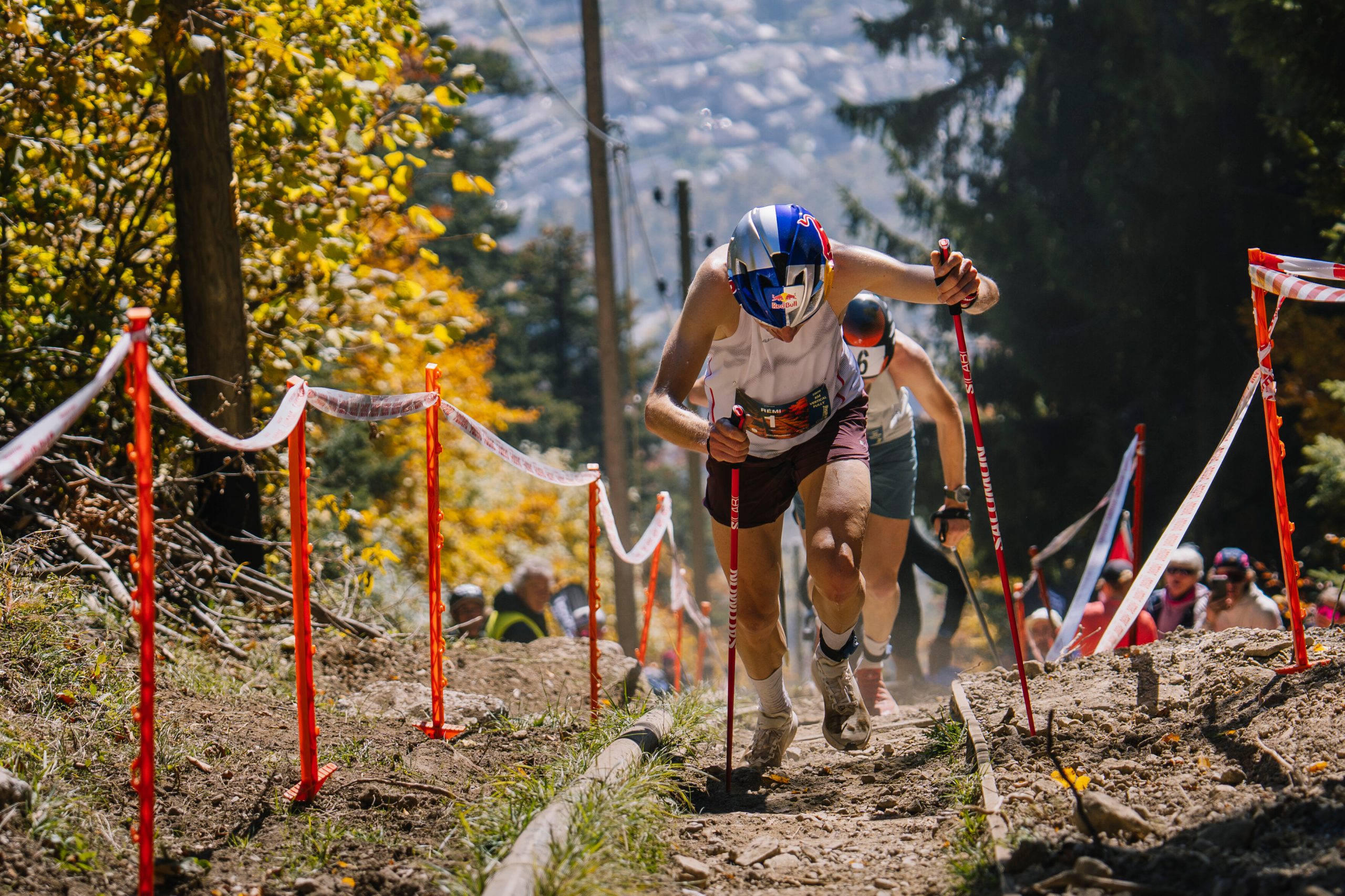
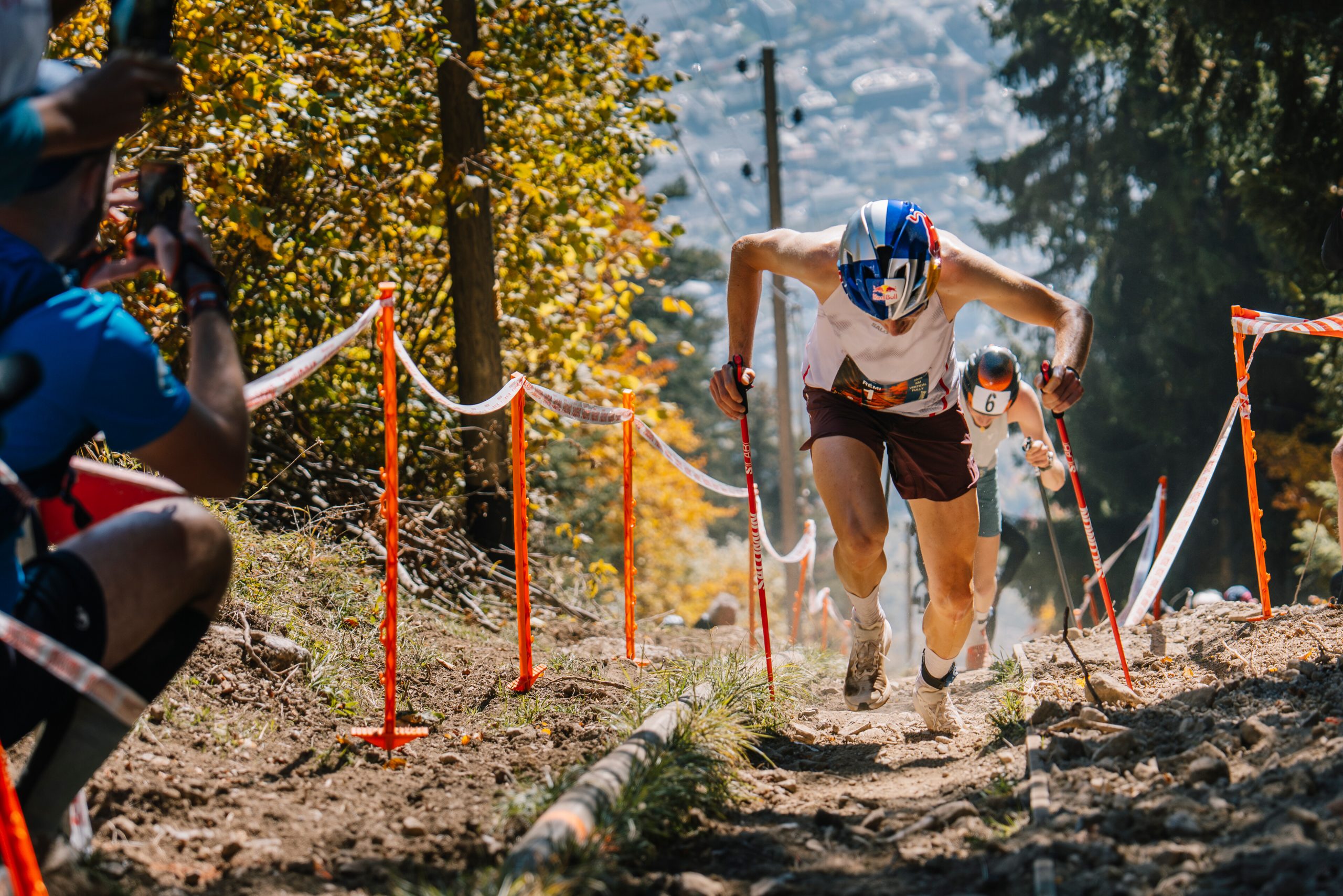
Photo: Bonnet pushing through the steep mid-section. Credit: Baptiste Fauchille / Red Bull Content Pool
### Physiology & Tactics
A vertical kilometer is like a 100-meter sprint collapsed into a nightmare climb. It demands explosive power, uphill efficiency, perfect pole technique, and pain tolerance. Bonnet’s dual identity as ski-mountaineer and trail runner played into this: the training that takes him skiing up glaciers carries over to uphill battles against the clock.
“It’s very, very steep and quite tough. If you try to stay upright on the slope, you fall backwards.” — Rémi Bonnet
During the race, poles become extensions of the athlete’s intent: they drive every step into the slope, they catch the body when the mountain pushes back. The course’s gradient doesn’t allow conventional running mechanics—it forces a rhythm more akin to ski-mountaineering uphill.
Tactically, Bonnet knew when to push and when to meter effort. He exploded out of the start, gained meter after meter. By mid-race he had a clear margin. He held the surge into the final steep terrace, an uphill finish that separated champion from amateur. The time of 27:21 resets the baseline for what the human body can do in a sustained uphill effort.
### Beyond the Record
This isn’t the first time Bonnet has stepped out of the vertical norm. He has multiple titles in ski-mountaineering—a discipline where uphill and downhill matter as much as duration. His ski-mountaineering success in 2024 and early 2025 set the stage for this summer’s return from injury: a fatigue fracture earlier in the year threatened to derail his season, yet he bounced back to claim the world vertical title in September at Canfranc (6.4 km, 990m D+ in 37:50).
More than that, this is personal geography. Fully is in his home canton, close to familiar terrain. He had climbed the line dozens of times; he knew the subtle holds, the changes of soil, the micro-cornices that bite when you’re out of breath. He knew the viewer presence, the media attention.
In the post-race interview he reflected: “I thought I’d started a little too quickly when I saw the first splits. Then, I thought that based on how I was feeling, everything was alright. So, I told myself that maybe today is going to be special and I’ll be able to hold on all the way to the top.”
### What’s Next?
What comes next for Bonnet is tantalizing. Having broken the vertical kilometer mark, he may turn to the uphill ultra domain, combining long endurance with steep grades. There’s speculation he may target lines where uphill dominates but downhill still demands technique—a hybrid of his skiing and trail running worlds.
For the sport of vertical running, his time is a new benchmark—27:21 will become the number everyone else chases. It reframes the discipline’s possibilities. And for mountain sport in general, Bonnet’s crossover between ski-mountaineering and trail running underlines a future where athletes blur boundaries instead of specializing.
### A Brief History of Vertical Kilometer Racing
The vertical kilometer as a formalized discipline emerged in the 1990s as part of the skyrunning movement, pioneered by Italian mountaineer Bruno Brunod and others who sought to create races that went straight up mountains with minimal horizontal distance.
**2014 – Urban Zemmer (Italy)**
Set the first recognized world record at Fully with 29’42”, establishing the course as the fastest in the world.
**2017 – Philip Götsch (Italy)**
Sliced nearly a minute off Zemmer’s mark, recording 28’53” at Fully. This record stood for eight years and was considered by many to be near the physiological limit.
**2021 – Kilian Jornet (Spain)**
Set an FKT (Fastest Known Time) of 28’48” at Vengetind, Norway, though this was not on an officially sanctioned VK course.
**2025 – Rémi Bonnet (Switzerland)**
Demolished the official record with 27’21” at Fully, breaking the barrier many thought impossible and resetting expectations for the discipline.
Women’s vertical kilometer racing has seen similar evolution, with French runner Axelle Mollaret setting a world record of 33’00” in September 2025 at Nantau-Montriond, France.
The discipline continues to grow, with the Vertical Kilometer World Circuit now featuring races across Europe, Asia, and the Americas. Fully remains the gold standard—the fastest, steepest, and most prestigious course in the discipline.
### Key Facts: Kilomètre Vertical de Fully
- Distance: 1.92 km (1,920m horizontally)
- Elevation gain: 1,000m (from 500m to 1,500m altitude)
- Average gradient: > 50%
- Peak gradient: Approaches 60%
- Record set by Bonnet: 27:21 (18 Oct 2025)
- Previous world record: 28:53 (Philip Götsch, Italy, 2017)
- Margin of improvement: 1 minute 32 seconds
- Equipment requirement: Poles mandatory; terrain demands uphill technique, minimal flat running
- Race format: Individual time-trial start with checkpoints every 100 meters
- Participants 2025: 669 runners (approximately)
### Technical Specifications
- Bonnet’s height: 1.82m (not 1.77m as originally stated)
- Bonnet’s weight: 61kg (not 64kg as originally stated)
- Born: 3 March 1995 (age 30)
- Hometown: Charmey, Gruyère district, Canton of Fribourg, Switzerland
- Primary sponsors: Salomon, Red Bull
- Previous VK World Series: Winner 2015
- World Champion Vertical: 2025 (Canfranc, Spain)
- Average speed: Approximately 2,195m/hour (vertical)