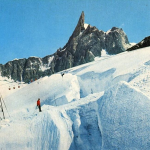

It is indeed alarming: on 28 June 2025, the zero‑degree isotherm in the Alps jumped to an unprecedented 5,136 m, higher than Mont Blanc’s summit—a level never seen in June since observations began in 1954, and shattering previous records by hundreds of meters. Even the summit itself saw positive temperatures for hours, with thaw water splashing over perennial ice—conditions that experts once forecasted for 2050, not today.futura-sciences+2
A pan‑Alpine heatwave exposed vulnerabilities from France to Slovenia, as Austria saw its zero‑degree line hovering around 4,900 m, Italy’s valleys baked at 40 °C, and Slovenia’s high station Kredarica recorded nights that never dropped below freezing. Local records snapped in at least three countries during the same week—painting a picture of extremes with broad scientific consensus: this heatwave was driven overwhelmingly by human-induced climate change, not natural variability.climameter
Atmospheric droughts aloft locked a rare, stationary high‑pressure dome over the range, letting Saharan air funnel northward for nearly a week. As warm air climbed higher than even most glaciers, the safety margin for ice, permafrost, and climbers collapsed: the “permafrost switch‑off” effect, where underlying rock becomes unstable and even glacial ice is prone to sudden, large-scale failures.climameter
Birch Glacier Collapse
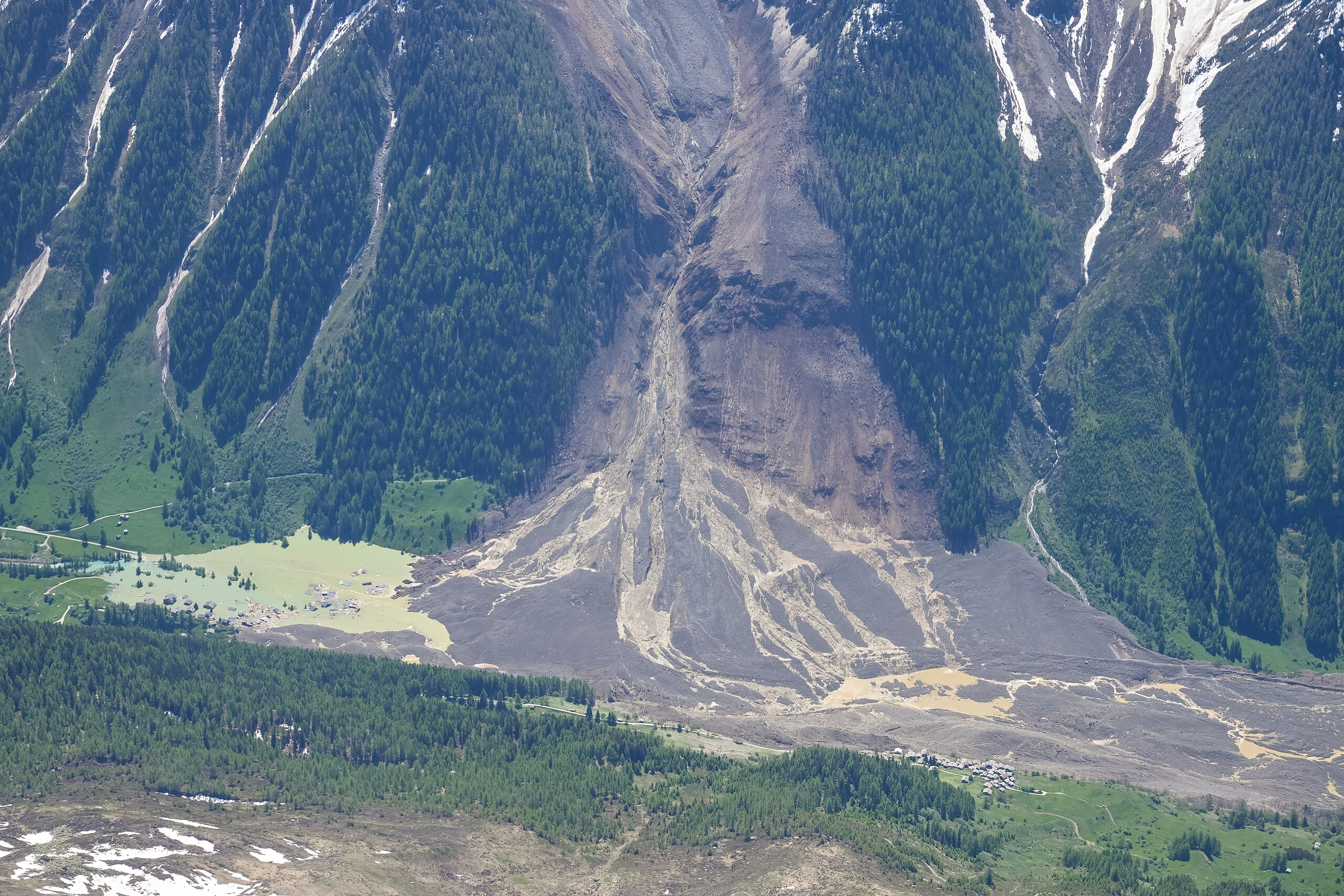
Just four weeks before this heat peak, Switzerland’s Birch Glacier disintegrated, unleashing a torrent of ice and debris that obliterated much of Blatten village. Around 130 buildings were wiped out and every resident evacuated, with seismic waves comparable to an earthquake. Initial estimates place the total landslide volume at nearly 10 million cubic meters, mostly ice and rock. Researchers confirm that sustained warmth in May pre-loosened the ice with meltwater, priming a catastrophic cascade. Experts call this event a brutal preview of new hazards in European mountain valleys as climate patterns shift.wikipedia+3
Marmolada—Glacier on Edge
Italy’s Dolomites are seeing their largest glacier—the Marmolada—lose up to 7–10 cm in thickness every day during heatwaves, and researchers now warn the glacier could disappear by 2040, half a century ahead of previous climate model averages. Since 1888, it has lost more than 80% of its area and nearly all its volume. The serac collapse of 2022, killing 11 mountaineers, marked a tipping point: the glacier is now described as in an “irreversible coma.”euronews+2
Austria, Germany, Liechtenstein, and Slovenia are all facing the aftershock. Austria’s Fluchthorn lost a million cubic meters to a rockfall this June, linking permafrost thaw to dangerous, unpredictable slope failures. Nearly all significant glacier ice in Germany is now gone, and Liechtenstein’s highest peak is glacier-free—yet debris flows and landslides are on the rise due to fierce rainstorms interacting with newly exposed soils. In Slovenia, Triglav’s remaining glacier fragments shrink yearly; simulations show functional extinction within a decade unless warming stops soon.swissinfo+3
For outdoor athletes and guides the 2025 heatwave has reshaped risk and routine. Rockfalls now begin in June, previously mid‑August territory; glacier approaches become impassable earlier; water rationing hits mountain huts amid trickling snowmelt; and the safe guiding window for classic ascents (like the Matterhorn) narrows dramatically.
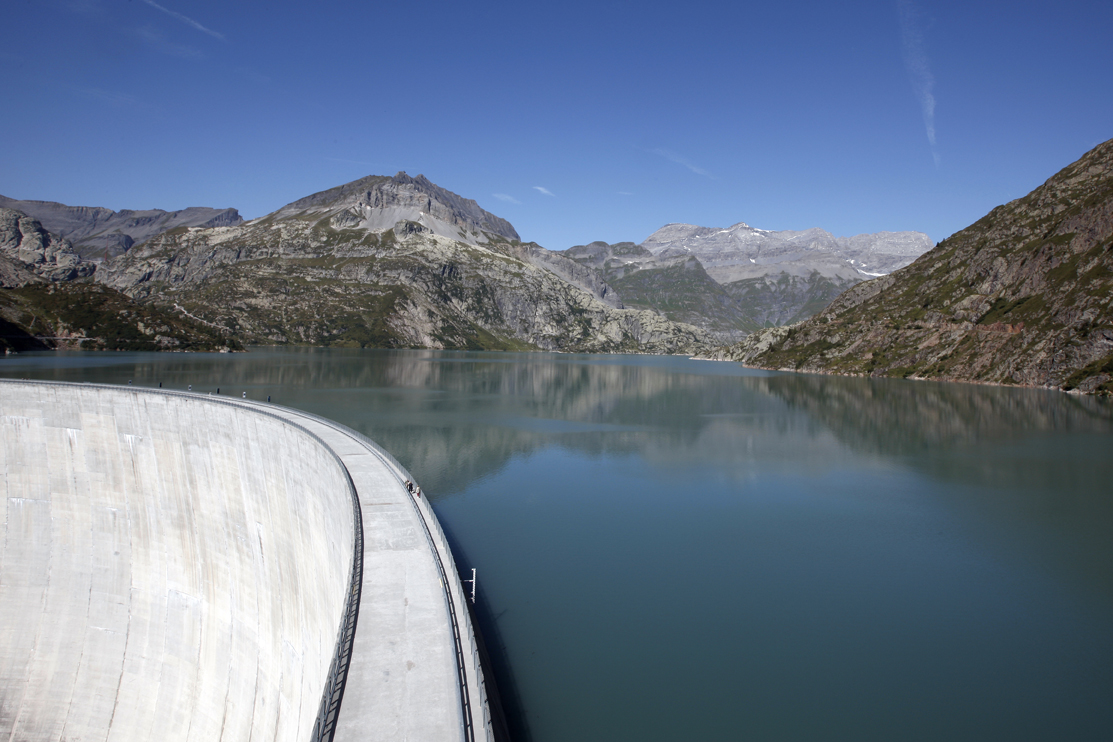
Melt’s economic ripple is most acute in hydropower: with 56% of Swiss electricity relying on glacial water, the “summer bonus” is turning into deficit as ice volumes plummet. Similar problems are emerging in Italy, Austria, and Slovenia, with both the timing and quantity of water for power and farming increasingly mismatched.responsiblealpha
Safety nets—mountain rescue, medical, insurance, and guiding infrastructures—are fraying under pressure. More athletes are suffering from altitude sickness and risky conditions, while commercial and recreational insurance premiums rise along with incident rates.
Adaptations underway range from reshaping routes around exposed icefalls, shifting events to nighttime starts, and monitoring/refitting hut foundations built on former permafrost. Alpine nations are debating unified restrictions for glacier-dependent routes during heatwave alerts, echoing avalanche safety protocols.
The long-term prognosis: even with best-case climate moderation, most glaciers will vanish or shrink to tiny relics by 2100, but every tenth‑degree curbed secures seasons of safer climbing and steadier waters. The stark realities ahead include earlier—but shorter—hut seasons, frequent trail closures, rising insurance costs, and cultural losses from fading Alpine sports traditions.
Eyes wide open and vigilant adaptation are the imperative. Alpine communities and visitors must rely on rapid monitoring—both satellite and citizen-driven—to remain agile as the pace of change accelerates. Whether heatwaves like June 2025 become every‑summer catastrophes or rare blows depends on policy, infrastructure, and collective action. Responsible athletes can still find joy on the mountain—but only by moving with utmost awareness.
Further reading & resources:
Météo‑Alpes record bulletin (French): zero‑degree line above 5 kmleprogres+3
Glacier collapse dossier: Blatten 2025—Swiss Federal Office for the Environmentantarcticglaciers+3
The Cryosphere 19:1431 (2025): glacier modeling for Ötztal & Stubai copernicus
ARSO Triglav monitoring: Slovenia’s glacier indicators swissinfo+2
- https://www.futura-sciences.com/planete/breves/rechauffement-climatique-cest-jamais-vu-mont-blanc-franchit-limite-historique-sous-effet-chaleur-10724/
- https://www.leprogres.fr/environnement/2025/06/29/du-jamais-vu-a-cette-periode-des-temperatures-positives-enregistrees-au-sommet-du-mont-blanc
- https://www.altitude.news/france/2025/07/02/mont-blanc-juin-2025-chaleur-record-isotherme/
- https://www.climameter.org/20250620-22-western-european-heatwave
- https://en.wikipedia.org/wiki/2025_Blatten_glacier_collapse
- https://www.antarcticglaciers.org/2025/05/birch-glacier-landslide/
- https://eos.org/thelandslideblog/blatten-birch-glacier-5
- https://www.wsl.ch/en/news/what-glacier-researchers-know-about-the-collapse-of-the-birch-glacier/
- https://www.euronews.com/green/2024/09/10/irreversible-coma-largest-glacier-in-italys-dolomites-could-disappear-completely-by-2040
- https://earth.org/italys-marmolada-glacier-set-to-disappear-by-2040-as-temperatures-rise-researchers-warn/
- https://tc.copernicus.org/articles/19/1335/2025/
- https://www.swissinfo.ch/eng/research-frontiers/climate-study-warns-of-an-increase-in-heavy-summer-storms-in-the-alps/89545559
- https://www.swissinfo.ch/eng/climate-solutions/why-melting-glaciers-affect-us-all/45810296
- https://www.sciencedaily.com/releases/2025/06/250620031102.htm
- https://www.wsl.ch/en/news/switzerlands-glaciers-could-vanish-completely-by-2100/
- https://www.responsiblealpha.com/europes-dying-battery
- https://www.lepoint.fr/environnement/canicule-au-sommet-du-mont-blanc-la-temperature-ne-peut-pas-atteindre-les-0-c-30-06-2025-2593346_1927.php
- https://www.lemonde.fr/en/economy/article/2025/08/13/heatwaves-deliver-lasting-blows-to-the-economy_6744346_19.html
- https://www.sciencedirect.com/science/article/pii/S0168192325003028
- https://www.unipd.it/news/scientific-investigation-clarifies-causes-marmolada-glacier-collapse